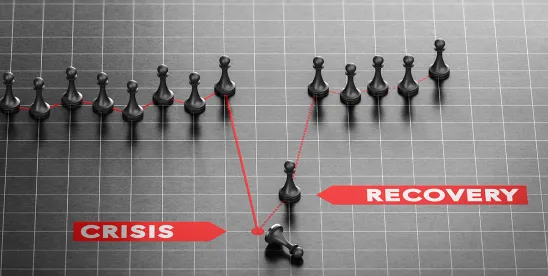
The reality of a crisis situation is that, by the time in-house counsel has been notified, the window for shaping the narrative may have already closed. “The first 60 minutes are critical, and this is backed by decades of research,” noted Vaughan. “Many organizations have learned very expensive lessons from losing control in the first hour.”
“Fake News”
According to recent MIT research that analyzed the lifetime of more than 125,000 news stories that were shared on social media, false information spreads 70 percent faster than true stories. Further, the Public Relations Society of America confirms that the first hour in a crisis offers the best opportunity for organizations to establish the facts and create a response that drives the narrative.
The lifecycle of a news story has evolved alongside the advancement of technology. “To paraphrase the legendary White House correspondent Sam Donaldson, news outlets are businesses and their revenue is dependent on reader interest and consumption – especially in today’s environment,” Vaughan explained.
The result is that, once a story reaches maximum audience exposure, it diminishes in importance. “An incident can become a story, often on social media these days. When audience interest in the story eventually reaches a climax, the news coverage moves on to the next hot lead, and the story dies,” Vaughan commented.
Though a story may die, the reputational damage from the news coverage remains. “By the time a story dies, public opinion has already been established, and it takes a long time for a company’s reputation to recover. Content publishers and social media influencers are actively working to steer attention to these stories to serve their own interests,” noted Vaughan.
If E&V isn’t working to proactively pitch positive stories for news media coverage, they are helping to manage a crisis. Managing a crisis in the media differs because the goal is to minimize interest in the incident, shorten the life cycle of the story, and ensure that other stories gather more attention, so interest in the crisis wanes.
Speed often trumps facts when managing a crisis in the digital media landscape. “Considering that most people have digital production studios in their pockets, news of an incident could be shared over 50 times in less than 10 minutes,” said Vaughan.
Local news outlets monitor social media feeds for story ideas, so it is not uncommon for an individual’s post to become a story that is published by a news outlet within minutes. “After an hour has passed, your incident is trending, a crisis situation is emerging and the narrative is being shaped by people who may not even know the facts,” Vaughan explained. “This is often the case and it is unfortunately not hypothetical.”
In fact, a USC study recently found that just 15 percent of users on social media were responsible for spreading 40 percent of what is typically called “fake news.” And worse, corrections to viral misinformation simply never have a chance of catching up.
Case Study: Smithfield’s
To illuminate how a social media post can spread like wildfire and spiral into a crisis, Vaughan shared the example of a real-life situation that took place at Smithfield’s Chicken ‘N Bar-B-Q. “For those of us who are long-term residents of North Carolina, it may be difficult to imagine having a bad experience at Smithfield’s,” joked Vaughan, “but that was the allegation and we were called in to help.”
A social media post accused the staff of exhibiting racially charged behavior towards police officers.
In less than 15 minutes, social media posts erupted over the incident. A local reporter read the socials and produced a story within hours. An editor at a national news desk read the story and pushed it out, resulting in a popular social media influencer with a large following publicly condemning the brand.
“Revenue started plummeting immediately,” noted Vaughan, “and this is alarming because it is a classic example of a typical crisis situation.”
Smithfield’s experienced the negative impact of what can happen if the critical first hour of a story is not properly managed. Within the first 15 minutes, the initial social media posts appeared.
Traditional media outlets were monitoring the posts before 30 minutes had elapsed. Between 30 and 40 minutes, the media began reaching out to the relevant parties for comment.
After a great deal of hard work by a hastily assembled response team, the matter was resolved in about a week. Thanks to the facts assembled through video surveillance and an incident timeline, the truth was established. Through intense media relations, the news media responded and reported the corrections. The news narrative shifted. And even the social media influencer – with a following of nearly one million people – set the record straight for their followers and came as close to an apology as the team could have expected. This took a lot of work – and a great deal of good fortune.
The First Hour Plan
Yet, why bank on luck when managing through a crisis? A first hour plan could have remedied the situation for Smithfield’s. With that in mind, Vaughan advised company leaders to ask themselves a few essential questions:
- Do I have a team that can mobilize in less than 15 minutes?
- Are holding statements and distribution channels ready?
- Does my team know their roles without looking them up?
- Can we deploy communications and set up monitoring within an hour?
- Does my team practice this process routinely?
Organizations with an adequate response plan answer yes to all the questions. “The crisis is going to come, it’s just a question of when,” notes Vaughan, “but a first hour plan can help you ensure it doesn’t get publicly consumed by the news media.”
E&V recommends establishing a predetermined response system specifically designed to control the first critical minutes of an incident report, greatly reducing the risk of an incident becoming a media crisis. “This is a real framework we’ve built for companies and organizations that recognize the urgency of this challenge and the need to act,” Vaughan said. “These systems can mobilize teams in 15 minutes and deploy communications in 60 minutes or less.”
Naming the players before the crisis occurs is essential because the team has to mobilize in the first 15 minutes. “You need to know who they are now, not when the incident is happening,” added Vaughan.
The next 15 minutes involves analyzing the situation, including the Five Ws and the Five Whys, and then making decisions based on that information.
Within the first 30 minutes, a common response is to deploy a holding statement, such as: “We are aware of the situation and we are monitoring it, we will make decisions and report back to you as soon as we can,” mentioned Vaughan.
By the end of the hour, the plan is being monitored and adjusted as needed.
The team needs to be authorized to make decisions on behalf of the brand and the organization, in response to the incident. The team should have pre-drafted templates so they can quickly respond to a variety of situations typical of their industry or line of work.
Creating a communications hierarchy is vital. “The CEO doesn’t need to be the first person to speak, on the contrary, we often advise that the CEO should be the last person to speak,” noted Vaughan. “You should protect the opportunity elevate spokespeople by rank over time, and company spokespeople are more than qualified to handle the first round of communications.”
Practice the Key to Success
Developing a plan and practicing it occasionally is essential. “By the time we get a call, in many cases, it’s full-on crisis mode…hair on fire, anxiety levels up, stress levels skyrocketing…the CEO is melting, and the executive team is trying to gain control of the situation,” commented Vaughan.
“Since only 49 percent of companies have a plan, we’re often challenged to create and manage one in the middle of a crisis,” Vaughan said. The challenge for in-house attorneys, of course, is to balance legal risks with the needs of the communications team.
In a crisis, incomplete information is often combined with intense time pressure. And considering that every minute of delay equals less narrative control for the brand, the stress and the risks involved with a crisis can quickly spiral.
The costs associated with losing the first hour are substantial. Reputational damage compounds at an hourly rate, since misinformation spreads faster than facts. This results in speculative media narratives, employee confusion and negative attention from regulators.
“The longer an organization waits to respond, the more the seeds of doubt grow in the public’s mind,” added Vaughan. “The companies that emerge stronger aren’t necessarily those that avoid a crisis, they’re the ones that control the first hour,” concluded Vaughan.
Questions
An audience member asked about the value of a crisis management plan for small- to mid-size organizations, wondering if the story of an incident could be eclipsed by other news. Of course, the possibility exists that a story could fade away and be ignored by the general public.
However, the risk of alienating internal and external stakeholders makes a first hour response plan worthwhile and a viable strategy for mitigating risk. And a first hour plan provides a management team the opportunity to assemble, assess the situation and make the decision to allow the news reports to fade away.