
Hyundai is once again expanding its Ioniq lineup to include the compact ‘3’ model! But…
Hot on the heels of its Boulder concept SUV showing at the New York Auto Show, Hyundai has a new model to debut. This time, we’re looking at the brand-new Ioniq 3 compact EV, with some funky styling and minuscule proportions for those who don’t want something as large as the existing Ioniq 5 or Ioniq 9. With a different look, some fresh tech and a pretty decent range for such a small offering, there’s a lot to delve into at first brush with Hyundai’s new entry-level EV. In fact, Tommy is in Italy covering the Ioniq 3 debut during Milan Design Week, so we’ll have even more coming up soon.
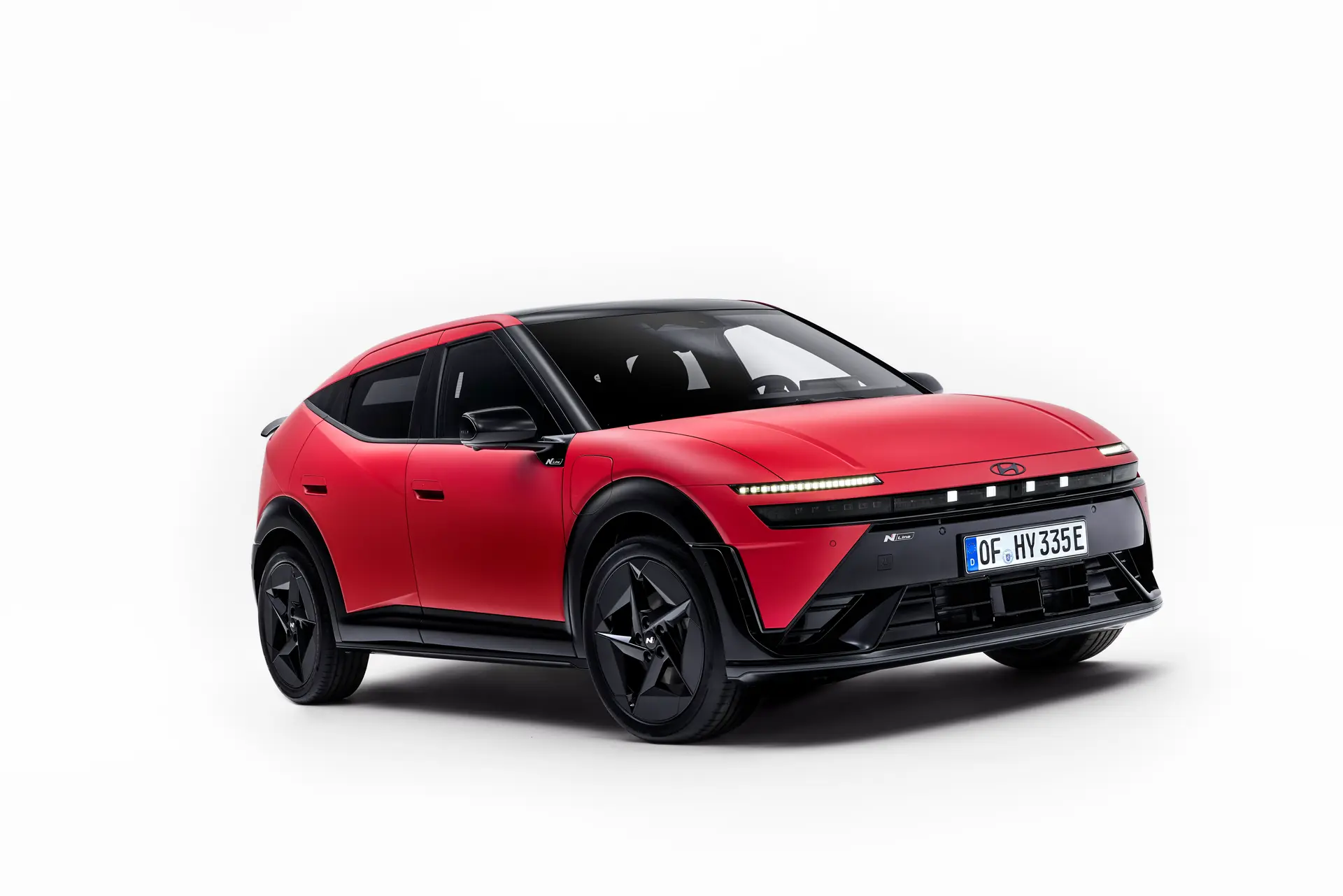
Right off the bat, Hyundai brings up its new ‘Art of Steel’ design language expanding to this new Ioniq 3 model. Pixelated lighting is still a fundamental part of the design, while the four dots up front and out back are meant to symbolize the letter ‘H’ in Morse code. The low nose shoots for aerodynamic efficiency (overall, the 3 gets a drag coefficient of 0.263), while the roofline runs straight over the front and rear occupants before coming back down to blend into the rear spoiler. Hyundai calls this silhouette “Aero Hatch” technology, with the automaker saying this approach balances “material authenticity” with precise and simple design. Take that for what you will, but it certainly doesn’t look like most other small hatchbacks out in the wild.
Practically speaking, the new Hyundai Ioniq 3 continues what we’ve seen with the other Ioniqs so far. It rides on the automaker’s E-GMP platform using a 400-volt architecture, with two available battery options. The Standard Range model packs a 42.2-kWh battery with a single, 147-horsepower electric motor up front and up to 213 miles (344 km) using the European WLTP standard. The long-range model brings a more impressive 61.0-kWh battery pack instead, boosting the range up to 308 miles. While folks get a larger battery, the Ioniq 3 LR actually packs a bit less power than the entry-level version, at just 135 horsepower. Torque is the same for both cars at 184 lb-ft, but the grunt means neither car is particularly quick to 60 mph (around 9-9.5 seconds).
Overall, the Hyundai Ioniq 3 measures out to 163.6 inches in overall length, so we’re talking about a tiny tot of an EV here. For American drivers, that’s barely 4 inches longer than a Hyundai Venue, which is the brand’s smallest model we can get here.
We won’t be getting this one, unfortunately
Hyundai discusses this Ioniq 3 as it appeals to European sensibilities many times over in its official reveal Monday morning. While there’s occasionally some ambiguity on whether some cars launching in Europe will eventually make their way to America, don’t hold your breath on this one. This is strictly for European buyers and European roads, for the time being. Its 15.6 cubic feet of cargo space offers a little bit of storage for those who will pick this up as a little runabout, it smacks a bit too small for the Sates. That said, it’s not entirely hopeless if you do want a small EV over here, since we will be getting the Kia EV3 with made its formal production debut at the New York Auto Show a few weeks ago.
Hyundai’s Ioniq 3 packs a wide range of driver assistance systems for those European buyers. That includes Highway Driving Assist 2, Remote Smart Parking Assist, Memory Reverse Assist, a 360-degree camera, blind-spot monitoring and seven standard airbags. It also brings up to 22 kW of AC charging capability and fast DC charging as well, with Hyundai promising 10-80% charging capability in about 29 minutes. Not bad for such a small car, even if we aren’t getting it over here.
The new Hyundai Ioniq 3 will hit European markets in the third quarter of 2026, with pricing expected to land in the upper-€20,000 range.