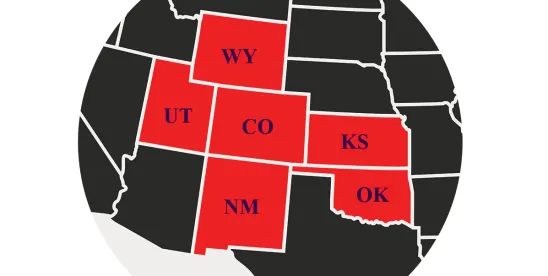
On April 21, 2026, in Liberty Global, Inc. v. United States, the Tenth Circuit held that the economic substance doctrine was “relevant” and applied to deny Liberty Global, Inc. a $2.4 billion deduction and imposed a 40% penalty with respect to a transaction known as “Project Soy”. The Tenth Circuit’s decision was highly anticipated, as various courts have differed on whether a separate relevancy determination is required before the doctrine is applied to a transaction, and, if so, what that relevancy determination entails.[i]
The Tenth Circuit held that, at the very least, the economic substance doctrine is “relevant” to any attempt by a taxpayer to “mechanically utilize” the provisions of the Code “to obtain a benefit not intended by Congress.” In the Tenth Circuit’s view, mere compliance with the Code is not enough to satisfy the doctrine; however, the test enunciated by the court provides limited guidance for future cases and further encourages debates about legislative intent. Uncertainty as to the proper application of the doctrine persists for taxpayers, who could face strict-liability penalties of 40% of an alleged understatement of tax in transactions which are found to lack economic substance.
Background
Economic Substance Doctrine
As codified in section 7701(o)(1) of the Code, the economic substance doctrine applies to transactions “to which the economic substance doctrine is relevant.” The statute then contains a two-prong test: (i) the transaction must meaningfully change the taxpayer’s economic position; and (ii) the taxpayer must have a substantial non-tax business purpose for entering into the transaction. Case law differs on whether or not the prefatory language in the statute regarding relevance is a distinct element to be satisfied under the doctrine. In 2010, the Joint Committee on Taxation released guidance that the economic substance doctrine is not relevant to “basic business transactions,” though this is not part of the statutory language.[ii] See our prior blog post about the economic substance doctrine for more details about the codified doctrine and its history.
Procedural History – the District Court Opinion
The set of transactions at issue in Liberty Global sought to exploit a last day of the year rule/mismatch in the international tax provisions of the Tax Cuts and Jobs Act (“TCJA”). The initial litigation focused on whether the regulations pursuant to Section 245A were legitimately enacted due to lack of adherence to notice-and-comment requirements. The question of economic substance was not raised by the government until late in the summary judgment process. Deciding the issue of economic substance, the district court held that Section 7701(o) does not require a threshold relevancy inquiry, and that the economic substance doctrine is relevant whenever the two-prong statutory test is satisfied. In so holding, the district court relied on Tenth Circuit cases that did not engage in an independent relevancy analysis prior to the application of the doctrine. See our prior blog post for more detail about the district court decision.
Tenth Circuit Opinion
Majority
The Tenth Circuit framed the question for decision narrowly as whether the economic substance doctrine was relevant to Project Soy, and if so, did Project Soy meet the requirements of the economic substance doctrine and section 7701. The Tenth Circuit concluded “yes” and “no”, respectively, but its analysis was mostly focused on rejecting two limited taxpayer counterarguments.
First, the taxpayer conceded that the first three steps of Project Soy did not have economic substance, arguing instead that the economic substance doctrine was not relevant to the transaction because it complied with the mechanical requirements of the Code. The Court rejected this argument, citing a string of cases which demonstrate that courts will not uphold transactions which “comply with the literal terms of the tax code” but which lack economic substance. Despite the opinion’s conclusion that the taxpayer sought benefits unintended by Congress, the opinion does not discuss how Project Soy failed to comply with Congressional intent under any particular provision of the Code—seemingly relying on the taxpayer’s failure to meaningfully contest the district court’s determination of Congressional intent.[iii]
Second, the taxpayer contended that the economic substance doctrine is not relevant to basic business transactions. According to the taxpayer, because the first three steps of Project Soy constituted basic business transactions, the doctrine could not apply to them. The Tenth Circuit concluded that Project Soy must be analyzed as a whole, and as such was a complex tax-structuring transaction and not a “basic business transaction” that might be excluded from the economic substance analysis.
The Tenth Circuit held that the relevancy question was a “red herring” in this case, in part because the Court read the district court’s opinion as imposing a relevancy requirement, contrary to the interpretation offered by the taxpayer.[iv] The Court held the economic substance doctrine was clearly relevant to Project Soy. The Tenth Circuit did acknowledge that the doctrine was irrelevant to certain economically meaningless transactions, such as DISC transactions, but did not significantly elaborate on the scope of this potential rule.[v]
Dissent
The dissent analyzed historical case law and the statutory text to find that section 7701(o) requires a threshold relevancy analysis. The dissent would have found that the economic substance doctrine is not applicable “when economic reality and taxpayer motive are not relevant to the statutory text.”[vi] The dissent concluded that the tax benefits from Project Soy arose from the interlocking application of seven different Code provisions and resulted in “actual gain” from the sale of the controlled foreign corporation (“CFC”) at issue.[vii] The dissent characterized the remaining elements of Project Soy as permissible taxpayer decisions relating to how and when the gain from the sale of the CFC would be recognized under the relevant statutes, and concluded that these decisions did not implicate the economic substance doctrine.[viii]
Analysis
As the majority opinion describes it, Project Soy was not a “basic business transaction” because it “was a tightly integrated series of transactions that took place over a short, four-day period for the specific purpose of taking advantage of an unintended ‘mismatch’ in the international tax provisions of the TCJA.” In other words, the taxpayer in this case structured a convoluted transaction to generate a deduction that the literal words of the statute permitted, but the taxpayer could not support the transaction by citing any specific tax policy or legislative history that could justify it.
The majority opinion states the following principle, in interpreting the requirement of relevance in the statute: “[t]he economic substance doctrine codified in § 7701(o) is relevant to attempts by taxpayers to mechanically utilize the provisions of the Tax Code to obtain a benefit not intended by Congress.” That statement, however, must be viewed through the lens of the Project Soy transaction that the Court reviewed, and may become difficult to apply beyond this case. This is because Project Soy itself had several steps which would otherwise qualify as “basic business transactions,” but which, when taken as a whole, failed to meet standards for economic substance.
There are numerous other instances in the Code where Congress clearly intended rules to apply mechanically even when economic justifications for the transactions are limited or nonexistent. The Tenth Circuit’s framing of the issue, focusing on whether the benefit was intended by Congress, seems to exclude application of the doctrine to those situations: the majority’s citation to Summa Holdings and DISC transactions seems to suggest that this is where “relevance” plays a role. However, the majority mostly avoided the question as to how to determine whether particular tax results are really within the Congressional intent—relying on the district court’s analysis of Congressional intent and combined with the taxpayer’s general failure to contest this analysis on appeal. As such, application of the majority’s test to other Code provisions or other transactions is unclear.
In short, the Tenth Circuit opinion stands for a few propositions: first, that a “tightly integrated” series of transactions taking place over a short period of time needs to be tested as a whole against the economic substance doctrine (and that it is improper to break individual steps apart and approve of them as “basic business transactions”); and second, that the economic substance doctrine is relevant at the very least where tax benefits are claimed in situations inconsistent with Congressional intent. The Tenth Circuit opinion is not so clear, however, on applying its analysis beyond its facts.
Conclusion
Although this opinion was highly anticipated in the tax community, the Tenth Circuit provided little guidance that could be applied beyond the confines of the reviewed transaction. Despite the Tenth Circuit being sympathetic, in principle, with the existence of a relevance threshold, it does not provide much clarity about how such relevance determination should be made in other, future cases, particularly where other elements of the doctrine are contested. Courts will continue to grapple with this question in the future. For taxpayers, application of the economic substance doctrine remains uncertain.
[i] No. 23-1410, affirming the U.S. District Court for the District of Colorado. The district court in Liberty Global found that the relevancy inquiry was essentially coterminous with the other elements of the statute. In contrast, in Patel v. Commissioner, the Tax Court held that a separate relevancy determination is a threshold requirement prior to the application of the economic substance doctrine.
[ii] It is worth reviewing the relevant passages of the Joint Committee Report:
The provision is not intended to alter the tax treatment of certain basic business transactions that, under longstanding judicial and administrative practice are respected, merely because the choice between meaningful economic alternatives is largely or entirely based on comparative tax advantages. Among these basic transactions are (1) the choice between capitalizing a business enterprise with debt or equity; (2) a U.S. person’s choice between utilizing a foreign corporation or a domestic corporation to make a foreign investment; (3) the choice to enter a transaction or series of transactions that constitute a corporate organization or reorganization under subchapter C; and (4) the choice to utilize a related-party entity in a transaction, provided that the arm’s length standard of section 482 and other applicable concepts are satisfied. Leasing transactions, like all other types of transactions, will continue to be analyzed in light of all the facts and circumstances. As under present law, whether a particular transaction meets the requirements for specific treatment under any of these provisions is a question of facts and circumstances. Also, the fact that a transaction meets the requirements for specific treatment under any provision of the Code is not determinative of whether a transaction or series of transactions of which it is a part has economic substance.
The provision does not alter the court’s ability to aggregate, disaggregate, or otherwise recharacterize a transaction when applying the doctrine. For example, the provision reiterates the present-law ability of the courts to bifurcate a transaction in which independent activities with non-tax objectives are combined with an unrelated item having only tax-avoidance objectives in order to disallow those tax-motivated benefits.
[P.L. 111-152; JCX-18-10]. Internal citations above have been omitted, but each of the examples are supported by at least one citation (and in many instances multiple citations) to cases decided by the U.S. Supreme Court, U.S. Tax Court, and federal district courts and appellate courts. The report further stated that enactment of the codified economic substance doctrine “does not change present law standards in determining when to utilize an economic substance analysis.”
[iii] Liberty Global, No. 23-1410 at n.2.
[iv] Liberty Global, No. 23-1410 at n.6 (“In the context of this case, the issue is a red herring. Ultimately, the district court concluded the doctrine was relevant because Project Soy was an attempt by LGI to mechanically utilize the provisions of the TCJA to obtain a benefit not intended by Congress. . . . This understanding of the relevance of the doctrine is entirely consistent with extant precedent.”)
[v]Liberty Global, No. 23-1410 at n.10.
[vi] Liberty Global, No. 23-1410, Eid, J., dissenting, at 12.
[vii] Id. at 17.
[viii] Id. at 18-19.