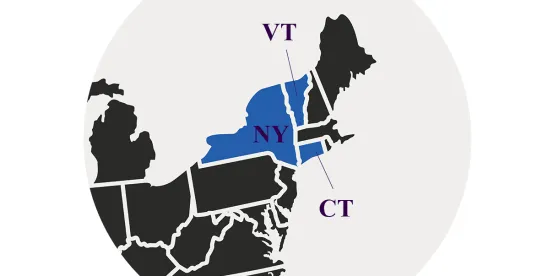
The steady stream of pixel-tracking litigation continues to reshape the digital privacy landscape, and the latest example comes from the Eastern District of New York. In Carbone v. Limited Run Games, Inc., a federal court approved a $2.72 million class settlement resolving claims under the Video Privacy Protection Act (“VPPA”), the 1988 statute that once protected consumers’ VHS rental histories but is now being deployed against modern tracking technologies.
The case followed a now-familiar theory in privacy litigation. Plaintiffs alleged that Limited Run Games embedded tracking technologies, most notably the Meta Pixel, on webpages containing video content. According to the complaint, those tools transmitted users’ video-viewing activity and identifying information to third parties such as Facebook without their knowledge or consent. Plaintiffs argued that this disclosure violated the VPPA, which prohibits video service providers from knowingly sharing a consumer’s video-viewing information without permission.
While the statute predates the internet era, plaintiffs have increasingly relied on it to challenge modern advertising and analytics tools. Courts across the country are now grappling with how a law written in the age of Blockbuster applies to a world of embedded players, analytics dashboards, and cross-platform tracking pixels.
After mediation before a retired JAMS judge and further negotiations between the parties, the dispute resolved through a $2.72 million class settlement. The settlement fund will be distributed on a pro-rata basis to class members who submitted valid claims, after deductions for attorneys’ fees, administrative expenses, and service awards.
The agreement also contains forward-looking restrictions on the use of tracking technologies. Under the settlement terms, Limited Run Games agreed that it will not knowingly resume using Meta Pixel, TikTok tracking technologies, Google tracking technologies, or the X (formerly Twitter) pixel on portions of its service accessible in the United States to disclose specific video content requested by identifiable users, unless the company first obtains VPPA-compliant consent or the statute itself is amended or invalidated.
Class participation further supported approval of the settlement. Out of hundreds of thousands of potential class members who received notice, more than 27,000 claims were accepted, while only seventeen individuals opted out and no objections were filed. The court viewed that response as strong evidence that the resolution was fair and reasonable.
The court also approved attorneys’ fees equal to one-third of the settlement fund, approximately $906,666, along with roughly $7,500 in litigation costs. Although that amount exceeded counsel’s lodestar calculation, the court concluded that the resulting multiplier fell well within the range typically awarded in class action settlements. The two class representatives were also awarded $2,500 service payments each for their role in the litigation.
The settlement underscores several themes that continue to define modern privacy litigation. First, it illustrates how legacy privacy statutes are being repurposed to regulate contemporary data practices. The VPPA may have been written with video rental stores in mind, but courts are increasingly being asked to determine whether it also governs digital video tracking and analytics technologies.
Second, the case highlights the litigation risks associated with embedding tracking pixels on webpages that contain video content. As plaintiffs’ lawyers continue to test the boundaries of the statute, companies that deploy analytics or advertising tools alongside video players may face exposure under a law that predates the modern internet.
For now, Carbone adds another entry to the growing list of VPPA pixel-tracking settlements, suggesting that, at least in this corner of privacy law, the play button continues to trigger litigation.