Article Summary
- The iX3 charges at up to 400 kW and can add 217 miles in a 10-minute stop, matching the best Chinese EVs on sale in Europe.
- Built on BMW’s new Neue Klasse dedicated EV platform, it’s roomier than the combustion X3 inside and drives better around corners.
- At €70,000 base (€82,738 as tested), it’s expensive, but the M Sport Pro pack’s seats and body control make a strong case for it.
The new BMW iX3 looks unmistakably like a BMW in person — just one that’s been dragged several years into the future. It rides on a new dedicated EV platform, brings back BMW’s shark-nose face for the LED era, and introduces a radically different interior philosophy. Like most bold new BMW designs, reactions have been split. Having spent a few days with it, I get why — in photos, it looks like a bigger break from the brand’s past than it really is.
More importantly, it doesn’t just look new. It feels new. The iX3 is more sophisticated, more resolved, and more ambitious than any BMW EV I’ve driven — including my previous favorite, the iX. I’d go further: it looks better than the combustion X3, drives better too, and has a cabin that feels genuinely special once you get past the initial shock and learning curve.
It also feels like a signal that Europe has stopped sleepwalking through the EV transition. The iX3 matches the charging speed and range figures you’d expect from the best Chinese EVs, but pairs them with the polish, body control, and that underlying sense of everything being properly sorted that established European brands still tend to do better than anyone else.
The Neue Klasse Face Actually Works

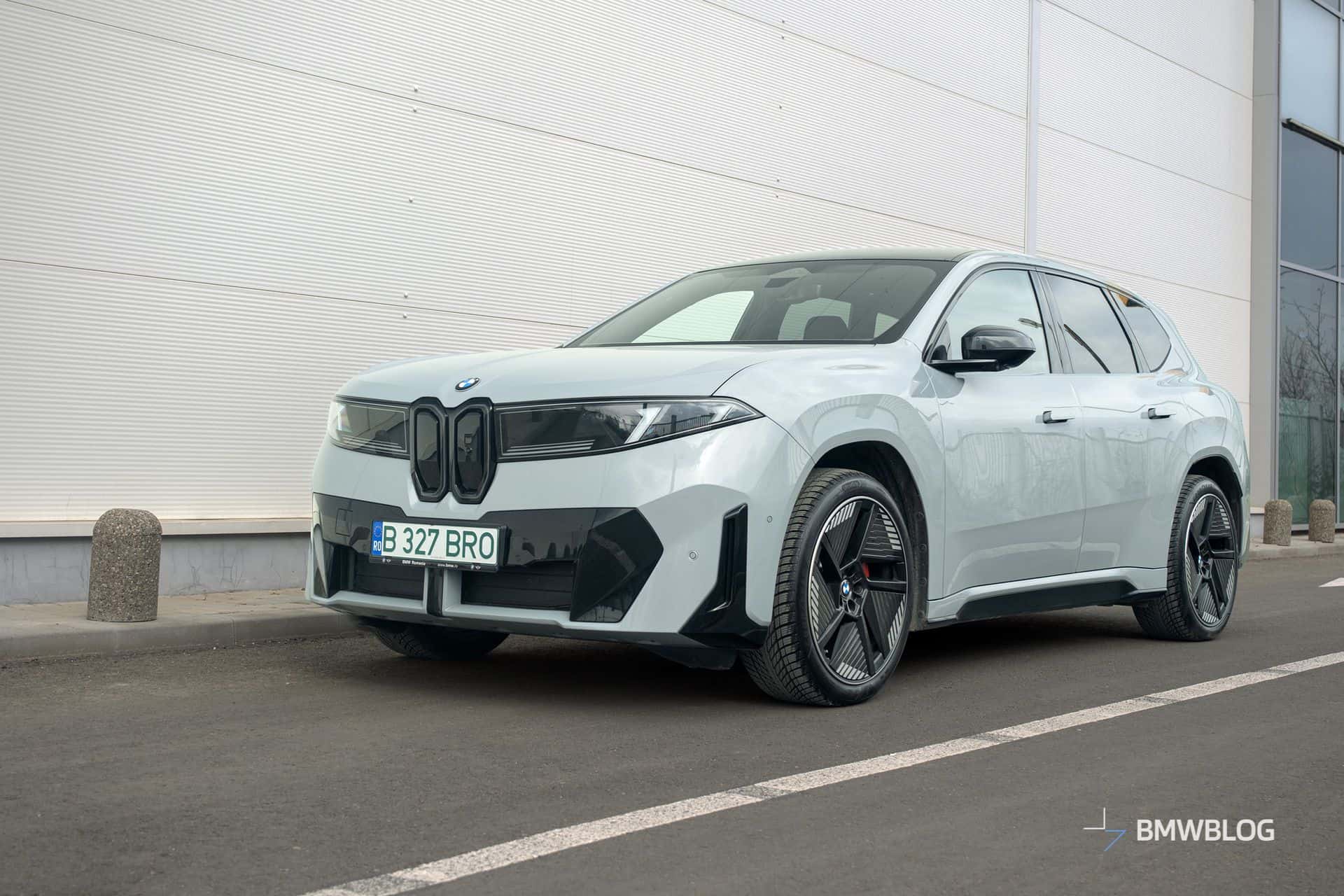
In photos, the iX3 looks like a major departure from anything BMW has built up to now. In person, though, you would never mistake it for anything else. The front end is bold and futuristic, but other parts of the design are surprisingly restrained.
Good
- Charging and range — 400 kW peak charging
- Drives like a BMW should
- Interior is a genuine step up
Bad
- Expensive — €70,000 base climbs fast with options
- Ride is on the firm side — no adaptive dampers at launch
- Steering requires too much lock
The front end, with its faux kidney grille and daytime running light strips, looks outstanding, especially at night. Unlike some other BMWs with light-up grilles, where the effect feels tacked on after the fact, the iX3’s nose looks like it was designed around illumination from the very beginning (because it was).

From the front, you really notice how slanted and aggressive the nose is. It’s one of the clearer nods to the original Neue Klasse cars of the 1960s, which helped define BMW design for decades. What’s clever here is that BMW has referenced its past without turning the iX3 into a retro-inspired pastiche.

The side profile is my least favorite angle. There just isn’t much happening here, and by the standards of the rest of the car, it’s a bit dull. A couple of lines emphasize the shape of the wheel arches, and there’s a crease low down in the doors, but visually, it never quite comes alive. I had a similar issue with the iX, and the iX3 repeats some of that.

Move to a rear three-quarter perspective, though, and you see the pronounced rear haunches that make the iX3 look aggressive and planted. Helping my tester achieve this more aggressive look was the M Sport Pro pack, which changes the front and rear bumpers, gets special sporty wheel designs, and gives the interior a sporty makeover complete with body-hugging bucket seats.
The rear M Sport bumper features a much larger diffuser element, which, together with the vertical reflectors surrounded by gloss black plastic elements, completely changes the look of the rear, adding a lot to the sporty aesthetic.
This Interior Takes A Minute. Then It Clicks

The arrival of the Neue Klasse platform marks a big step up over BMW’s previous EVs, including those based on adapted CLAR underpinnings and even the iX, which may be dedicated electric but still misses some of the usual packaging advantages. The iX3 is the first BMW EV with a frunk, and its completely flat rear floor gives the middle passenger proper foot room.
The iX3 has a footprint similar to the combustion X3, but inside it feels noticeably roomier, almost like something from the class above, so closer to an X5. With the driver’s seat set for my six-foot frame with long legs, there was still plenty of space behind me in the second row. Three adults across the back will still be a bit snug at the shoulders, though.
There’s a sense of airiness in the iX3’s cabin that is unlike any other BMW. The iX is the only one that comes close in terms of ambiance, but the iX3’s unusual screen setup, the strange steering wheel, and the different choice of materials and textures easily set it apart.
A week before driving the iX3, I also drove the new Mercedes-Benz GLC EV, which has a vast 39.1-inch display that stretches almost pillar-to-pillar. It looks futuristic and fancy, sure, but it also feels a bit excessive and pointless—there’s a lot of it, but not all that much to do with it.

By comparison, the iX3’s combination of a panoramic display at the base of the windshield and a parallelogram-shaped central screen feels much more purposeful. The panoramic display is effectively a full-width head-up display projected from below, and it works brilliantly in practice.
It’s highly customizable, and I especially like that you can strip it back so only the section in front of the driver remains, showing just the essentials, to keep you from getting distracted when driving at night.

The central screen is a highlight in itself. Just like the circular OLED display in new Minis, its unusual shape combined with excellent image quality and great response makes it a joy to use. BMW’s OS X is also fantastic, better thought out and more intuitive than the previous generation, although I do miss the traditional iDrive controller, which was a BMW staple for some two decades.
After the disappointment of the G45 X3 and some of its underwhelming interior materials, I feared the worst here too. The iX3 still has some of that knitted plastic trim that doesn’t feel great to the touch, but there’s less of it, and the rest of the cabin feels much more convincingly premium.

The plastic on top of the door cards is nice and soft, and it’s still nice to the touch even lower down. My M Sport tester had suede on the top doors, dashboard, and the seats, which felt and looked great and gave it a really sporty vibe.
I had absolutely zero complaints about the seats and the driving position, which is pleasantly low, and the fact that you now have to look over the steering wheel to see your speed didn’t make it feel like a BMW. The M Sport seats are also brilliant, with the perfect combination between lateral support and comfort; I liked them more than the M Sport seats in the X3 I drove before, both to look at and to sit in.

I’m still not completely sold on the steering wheel’s design, especially the version with the vertical spokes (even if it looks the most sculptural). My tester’s M Sport wheel, with its lower-mounted spokes, looks a bit more conventional while still keeping the floating-hub theme. But whatever you think of how it looks, it feels excellent in your hands. It’s different from any older BMW wheel, though not in a bad way, and it never once got in the way of driving or low-speed maneuvering, which I honestly half expected from the photos.
Big Numbers, Real Usability

With peak charging of up to 400 kW, BMW says the iX3’s 108.7-kWh battery can go from 10% to 80% in 21 minutes, with an average of around 250 kW. That puts it right up there with the best Chinese EVs currently on sale in Europe. BMW also says a 10-minute stop can add up to 217 miles (350 km) of range.
On its smallest and most efficient aero wheels, the iX3 xDrive50 is rated at up to 500 miles (805 km) on the WLTP cycle, and BMW even managed more than 620 miles (1,000 km) in a low-speed public-road test. In the real world, with normal driving and occasional use of the performance on offer, you’re not going to get anywhere near that WLTP headline figure.
With a full battery, my tester showed 311 miles (501 km), which is great given my driving style and the lower temperatures during my time with the car. You can easily achieve around 3.7 miles/kWh (17 kWh/100 km) driving normally at lower speeds, which gives you almost exactly 400 miles of real-world range, which, incidentally, is also the expected EPA rating for this version of the iX3 when it reaches the U.S. later this year.
Drives Like a BMW

Throwing a 5,070-pound (2,300-kg) SUV into corners should not be this entertaining. The iX3 doesn’t have adaptive dampers yet, nor a 48-volt anti-roll system or active air suspension, but it still stays impressively flat and composed.
It feels better than the X3 around the bends, thanks to its huge, heavy battery that’s placed really low in the car and acts as part of the chassis structure. Even though my tester was an M Sport, the pack doesn’t lower and stiffen the suspension, which is fine because it’s already on the firm side.
Maybe the optional adaptive dampers, due later, will improve this, but on rougher roads the iX3 is definitely on the firm side. It’s not uncomfortable, because the damping is excellent and takes the edge off the worst impacts, but you feel more of the road than you do in most rival SUVs, even the sporty ones.
Powering out of a corner with traction control disabled will see the rear stepping out with ease. It’s really easy to catch it, though, and it doesn’t feel like the iX3 has a problem if you subject it to this corner after corner. If BMW can make an electric SUV feel this good, this just raises my expectations for the i3 sedan.

The only thing that I found strange about the iX3 driving experience was how much steering lock you had to apply. In an era when many cars require less than a full rotation in each direction to achieve full lock, the iX3’s steering feels a bit old-fashioned, and it seems like a weird decision by BMW to have you do a minicab driver impression every time you have to do a three-point turn.
The thing that impressed me most in the iX3 may not sound like much, but for me, it made a big impact. It’s the so-called ‘limo stop’ function: when the car comes to a complete stop using one-pedal regen braking, it’s incredibly smooth, especially in B mode, when deceleration is stronger. It sets the iX3 apart from all other cars I’ve driven. Teslas do this too, but not as well, and in the iX3, even if you apply the friction brakes, the car will still try to iron out that last jolt of whiplash that makes your head hit the headrest.
This was made possible by Heart of Joy, one of the supercomputers running things in the iX3. The same electronic brain also dictates how it delivers and cuts power and BMW says it reacts 10 times faster than its older cars, meaning it can make minute corrections to the power delivery to keep you pointing in the right direction and also let you have a bit of fun when you want to.
Power in the xDrive 50 model is plentiful, too. To me, it felt like a 500+ horsepower machine, even though it has 462 hp and 475 lb-ft of torque. It accelerates to sixty from a standstill in 4.7 seconds and quickly reaches its top speed of 130 mph (210 km/h).
The acceleration sound pumped into the cabin through the speakers is not as cool or cinematic as what Hans Zimmer created for BMW’s previous generation of EVs. The movie soundtrack creator set the bar very high, and the iX3 doesn’t sound as good, especially compared to Expressive mode in BMW’s older EVs.
BMW’s EV Reset Starts Here

BMW may have just built the most complete EV in its class. The iX3 isn’t perfect, and it isn’t cheap, but it gets an awful lot right: it charges very fast, goes a long way, feels thoughtfully engineered and, crucially, still drives like a BMW.
That last bit matters because plenty of electric SUVs are competent and quick, but not many feel this cohesive. It is expensive, though. In Romania, pricing starts at just under €70,000, and my tester climbed to €82,738. The priciest extras were the €6,750 M Sport Pro package, the €1,950 Innovation Package, and the €1,455 panoramic glass roof, which annoyingly doesn’t open.
Even so, I’d seriously consider the M Sport Pro package for the seats alone, which were among the highlights of the whole car. Zooming out, it looks like BMW didn’t just make a better electric X3. It made a convincing case that its next generation of EVs won’t require buyers to choose between range, charging, quality, and driver appeal—it almost feels compromise-free. It’s expensive, sure, but you get a well-engineered and innovative vehicle that is hard to fault.
Exterior Appeal – 7.5
Interior Quality – 8
Steering Feedback – 8
Performance – 9
Handling – 9
BMWness/Ultimate Driving Machine – 8
Price Point – 7.5
8.1
The 2026 BMW iX3 is the first BMW built on the new Neue Klasse dedicated EV platform, offering a significant leap over any previous BMW electric vehicle. It features a 108.7-kWh battery with up to 400 kW peak charging, a 10-to-80-percent charge time of 21 minutes, and a real-world range of approximately 400 miles. The interior introduces a panoramic windshield display, a parallelogram-shaped central OLED screen running BMW OS X, a fully flat rear floor, and a frunk — all firsts for a BMW EV. The xDrive50 variant produces 462 hp and 475 lb-ft of torque, with a 0–60 mph time of 4.7 seconds and a 130 mph top speed. The iX3 drives with the composure and driver focus expected from BMW, with standout one-pedal braking smoothness and strong cornering body control despite the absence of adaptive dampers. The M Sport Pro package adds bucket seats, revised bumpers, and a sportier interior trim. European pricing starts at approximately €70,000, with the U.S. launch expected later in 2025.