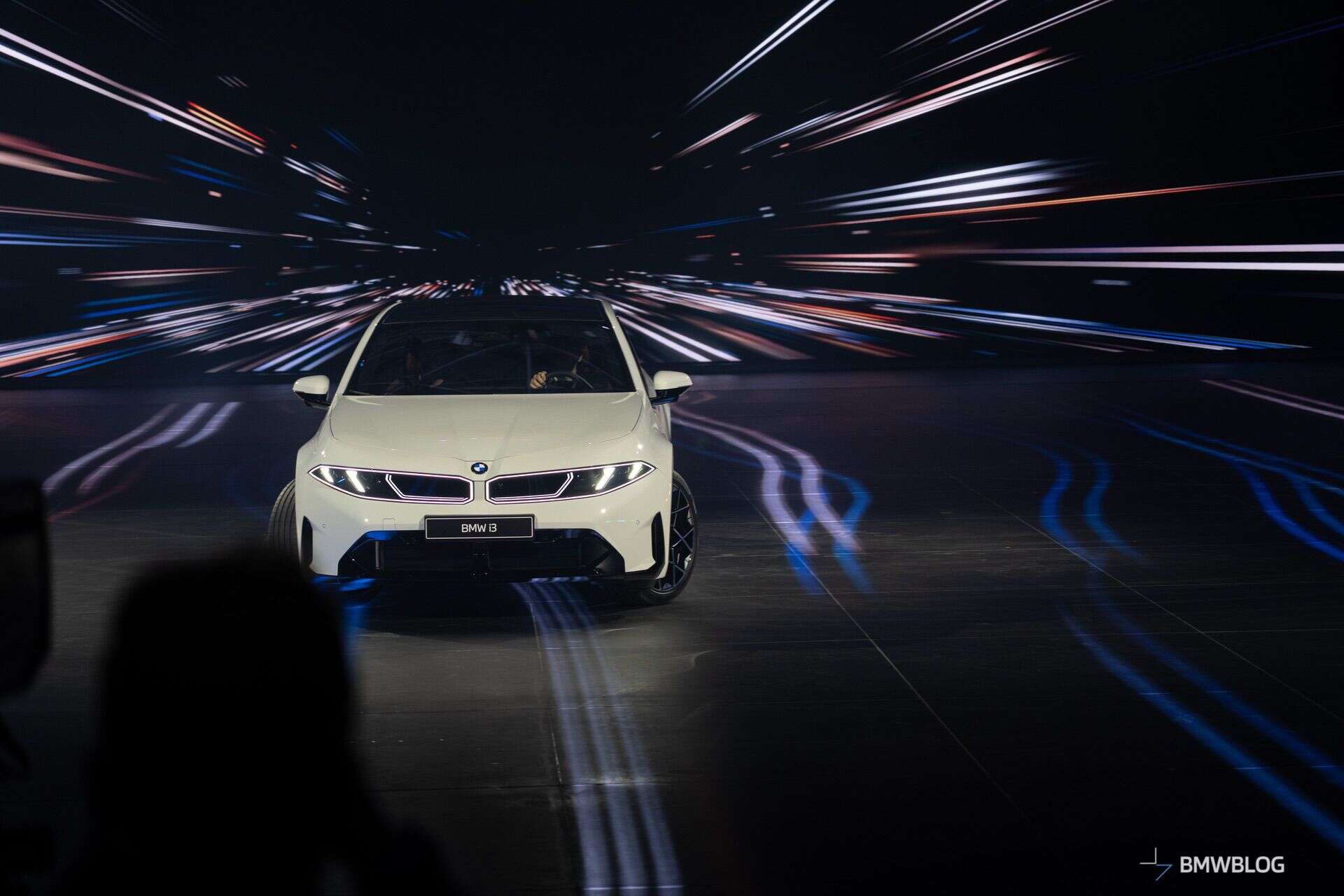
The arrival of Neue Klasse signals a huge change for BMW. Across the brand, every familiar badge from the 3 Series to the X5 will transform into something decidedly more modern. With increased reliance on electrification, it’s no surprise that BMW isn’t really focusing on designing for specific powertrains in mind. But even BMW’s combustion engine cars are seeing an ever-increasing reliance on software. Which means it’s perhaps unsurprising to hear from Joachim Post, BMW’s R&D boss, that software guides much of the development process.
Software: Key to Neue Klasse
If you’ve seen the Neue Klasse cockpit, this probably won’t be the most shocking bit of news you’ve read all year. “In the past, platforms were largely defined by body styles and engine layouts,” Post said in an interview with Automobilwoche. “Today, digital functions and software are at the core of everything we do.” Of course, removing the engine from the equation entirely makes that a bit of a forgone conclusion. But it is interesting to hear software as the core focus of the company touting the “Ultimate Driving Machine.”

Of course, that doesn’t mean BMW isn’t still going its own way. BMW has to rely on software and digital functions; in a world sans combustion engines and hydraulic steering, it’s the only way for the brand to make a mark on drivers. “Digital functions” is a huge umbrella term that — as we know from BMW’s Heart of Joy — could pertain to almost anything about the car. Be it menu buttons or steering feedback, Post claims BMW has processed as many as 200,000 software builds per day. All the more impressive considering a single vehicle has around 500 million lines of code, according to Post. BMW also keeps things in-house: in the past (and currently), rivals like Volkswagen and Mercedes have sought deals with Rivian to grapple with software woes. Not the case with BMW.
New software is literally at the heart of everything the brand’s doing. After all, MINI and Rolls-Royce will see the same (or similar) Neue Klasse changes in the near future. “We don’t develop technology just for one brand, but for our entire portfolio,” Post said. Finally, Post credited Neue Klasse development as a chance to “rethink carmaking from the ground up.” Bold language, and it begs one to remember that Neue Klasse is more than just iDrive X. After all, it’s not unlikely to see iDrive X across gas and EV offerings.
BMW Wants a Global Economy

Perhaps understandably, Post also criticized the European Union’s laser beam focus on sourcing local content for production. “You can’t assume battery plants will appear overnight,” he said. One can’t help but draw a parallel to the U.S. tariff situation, where many other brands are scrambling to come up with local production routes in order to remain profitable. Post also highlighted BMW’s localized efforts at global design, saying that a single global technology stack is unlikely to materialize any time soon.
With electrification only ramping up, it stands to reason that BMW would pivot from designing around powertrain configurations. Similarly, with the mid-size SUV eroding away sedan sales — and coupes and convertibles adding up to an even smaller fraction of sales — its hardly the time to design around specific body styles. Like it or not, BMW’s emphasis on software is likely the reason a new BMW still “drives like a BMW” — even if it isn’t exactly how you remembered it being in 1999.