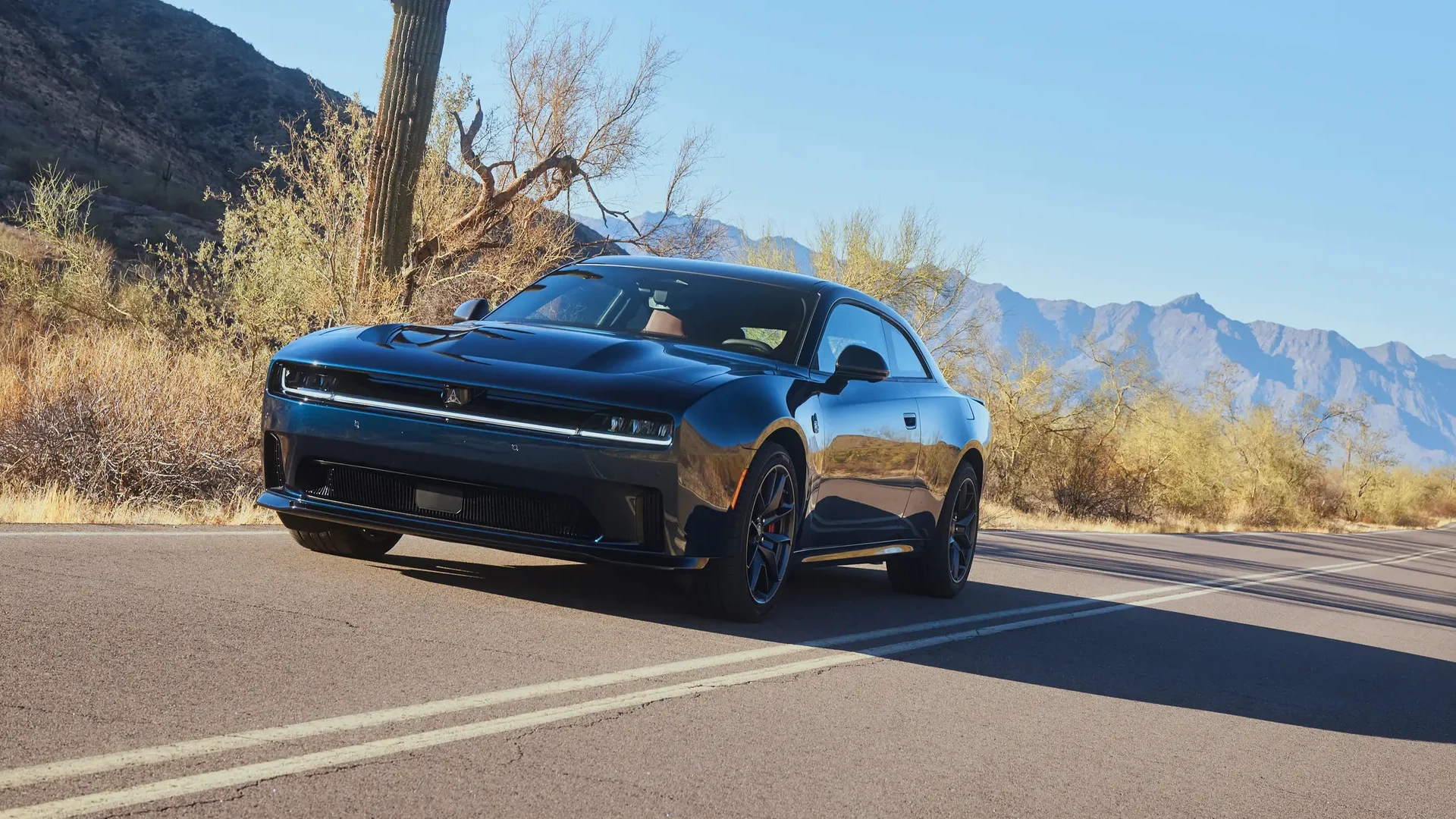
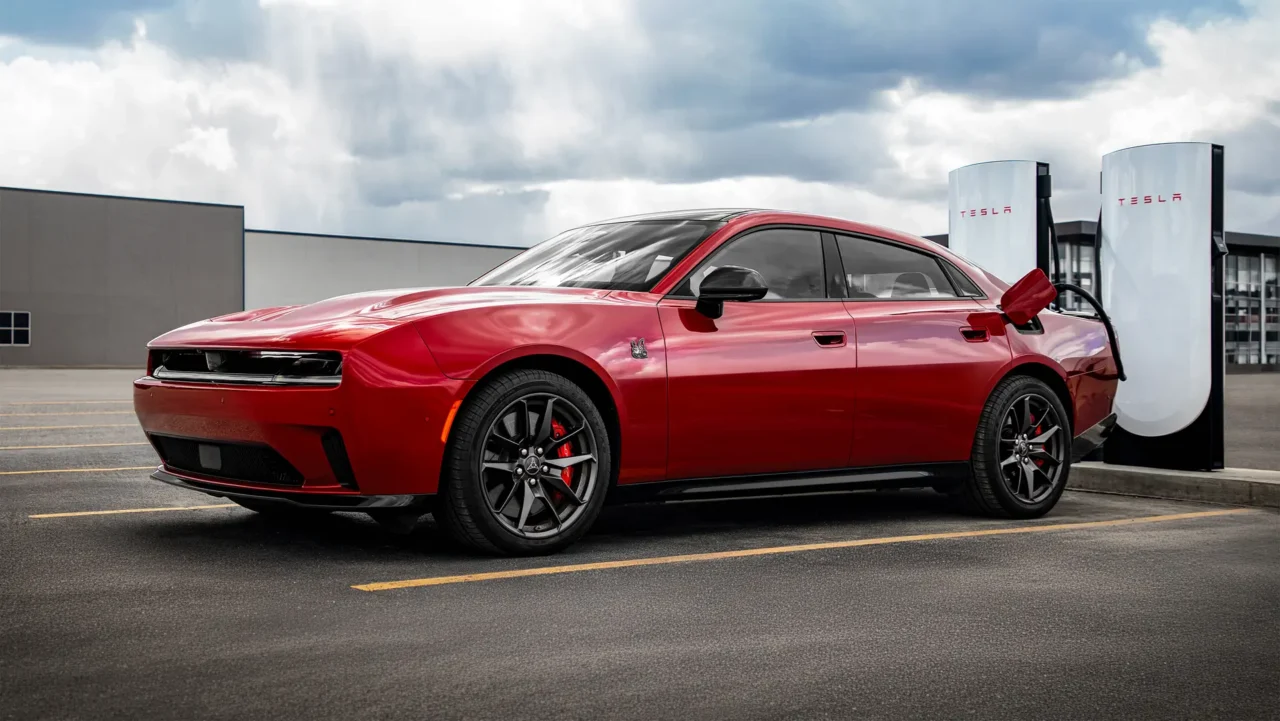
While gas-powered Charger Sixpack sales are gaining steam, the Daytona EV is headed in the opposite direction.
Full disclosure: I am by no stretch of the imagination an economist or an expert on the intricacies of making or selling cars. However, I think we all have a basic sense of how the system fundamentally works. Supply. Demand. When you don’t have enough of one side of that equation, there needs to be some adjustment to the other to get to a rosier picture in the long-term. The electric Dodge Charger Daytona, for example, saw a $5,000 price cut last year, as Dodge unleashed the gas-powered Sixpack upon the public. The Daytona’s first-quarter sales nonetheless dropped by a remarkable 88%…so what is the company’s answer? Apparently, raise the price.
Cutting a long story short, there are no significant changes to the 2027 Dodge Charger Daytona lineup. You still just get one configuration in the Scat Pack, and you can spec it with or without the Plus Package, like the Hurricane inline-six-powered Sixpack. It does not get a NACS charging port, but otherwise it is exactly the same. It now just costs $12,500 more, with the starting price now sitting at $72,495 before destination ($77,490 for the Plus model).
Adding an extra pair of doors and going for the four-door model only adds $500 onto that price. That’s some consolation, even if it’s a bit strange that doing the same thing on the gas model costs you $2,000.
So, what gives?
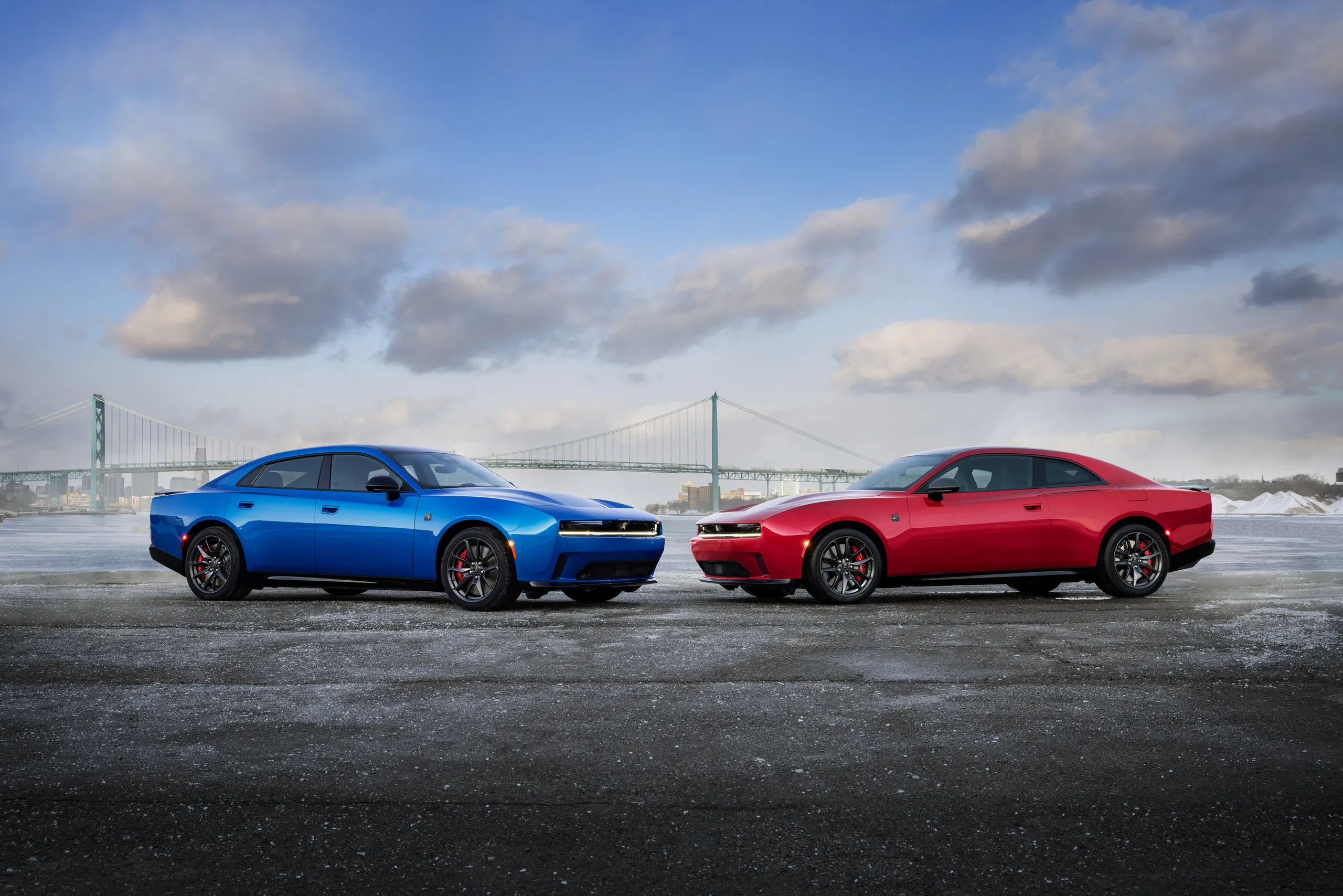
All the while, pricing for the 2027 Dodge Charger Sixpack models — both the 470-horsepower R/T and the 550-horsepower Scat Pack — is exactly the same. The R/T kicks things off at $49,995 before destination, while the Scat Pack goes up to $54,995. Now, through March of 2026 (the last quarter for which we have figures), Dodge dealers already sold 1,672 Charger Sixpacks. That’s not a particularly huge number, but it dwarfs the 240 EVs they sold.
The brand also seems to want to capitalize on the gas models as a sort of about-face from its EV-first launch, by saying that it is “turbocharging customization and gasoline performance” for the 2027 model year. To that end, none of the Charger models make any more power than they did before, but the official information Stellantis released this week puts the ICE Chargers front and center.
It does still acknowledge the Daytona Scat Pack and its 670 horsepower, to be clear, but the vast majority of Dodge’s current marketing, including the “All Gas, Full Throttle” splash page on its retail site, signals where it knows Charger buyers’ minds are at. And they are correct: The electric Charger Daytona has had a tough go of it, to put it mildly. The sales numbers show a distinct lack of buyer interest, irrespective of the recent price hike.
So…why hike the price, then? Surely, that won’t help sales figures in the short-term. In a response to inquiries on the matter, Stellantis says (quote from Jalopnik):
“We continue to adjust to shifting market dynamics, policy changes and economics while delivering Dodge performance vehicles that meet customer expectations. With the 550-horsepower SIXPACK-powered Dodge Charger Scat Pack, starting at a U.S. MSRP of $54,995, and 420-horsepower SIXPACK-powered Dodge Charger R/T at an MSRP of $49,995 now at dealerships, Dodge is shifting its focus to the new SIXPACK powertrain and delivering the most standard horsepower of any muscle car.”
As the folks over at Jalopnik point out, that statement doesn’t really give you much. Dodge builds its Charger models at its Windsor Assembly Plant in Canada. So, “policy changes and economics” may well be a nod to tariffs. Without delving into the minefield that is the current state of geopolitics, the financial impact of such tariffs can play a role in the price lift, because the EV is now more expensive to produce and sell at a profit. The other side of that coin is, for the low volume Stellantis does manage with the Charger Daytona, it needs to make up its bottom line in margins, which also means charging more. As the company builds fewer cars, especially in build-on-demand situations instead of pushing out thousands of vehicles, each unit has a higher cost to produce…you get the picture.
Bottom line: We may see even fewer Charger EV sales in the coming months, though Dodge is notably shifting its focus over to internal combustion anyway. If you have been eyeing an electric Charger, you’ll probably want to get one (and a NACS adapter) before the price hike really comes into force. 2024 and 2025 models are available with huge discounts, since the take rate is already pretty soft, and a build-to-order sort of approach moving forward means dealers probably won’t stock Charger EVs much at all, or offer discounts on ones people do come in to order.
Other changes across the 2027 Dodge Charger lineup
Stellantis also announced other changes to the Charger lineup for 2027, applying to both the Sixpack and the Daytona. Petrol Blue performance leather seats and red stitching are available for Scat Pack models, and Demonic Red seat belts are available across the lineup. A full Satin Black painted hood is an option, as are orange and black brake calipers with the Brembo brake packages. Mopar is offering up more graphic options like dual stripes and bodyside stripes, while you cna also get a glass roof sunshade as part of the all-weather interior package.