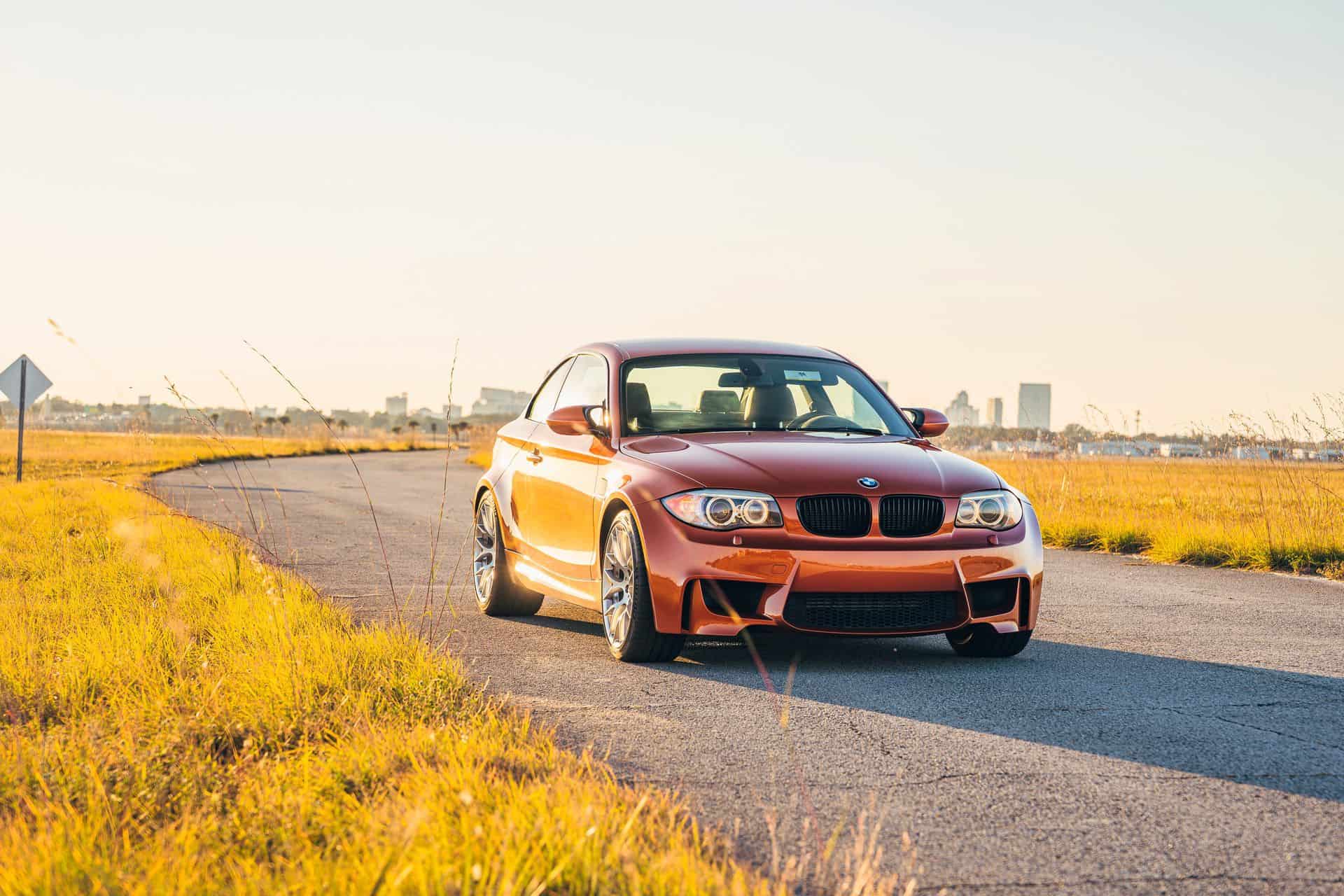
Fifteen years ago, BMW did something unusual: it built a car that felt deliberately out of step with its own trajectory. The BMW 1 Series M Coupe — better known simply as the 1M — arrived in 2011 as a compact, aggressive, and unapologetically analog driver’s car at a time when the brand was trending toward bigger, heavier, and more refined machines. In hindsight, that decision looks less like a detour and more like a moment of clarity.
BMW 1M Development and Details

The 1M was a one-year-only production model, developed rapidly and with a clear enthusiast focus. Codenamed “Pyrat,” it was a pet project that began largely in secret and became a labor of love for engineers. Working diligently on the project while the boss was out of town, they presented a mostly complete project to a freshly-back-from-vacation boss who, amazingly, green-lit it. So the story goes, anyway. The car borrowed heavily from the BMW M3 parts bin — wheels, suspension components, and more — creating what could be seen as a “greatest hits” M car. But arguably, hardware was only half of what defined the car. The other half was philosophy. No dual-clutch transmission — no automatic option at all, actually. Just a six-speed manual, rear-wheel drive, and a twin-turbo inline-six delivering 335 horsepower and up to 370 pound-feet of torque.
That powertrain, with the N54 engine at the heart of it, gave the 1M a distinctly different character from the high-revving, naturally aspirated M cars that came before it. Purists initially questioned the choice to use a “non-M” engine, but the torque-rich delivery and explosive midrange quickly won drivers over. With a zero to 60 mph time of around 4.5 seconds, it was nearly as quick as its bigger and more powerful sibling, the M3.
Of course, that’s at least partially thanks to another endearing 1M quality: size. At just over 3,300 pounds (1,495 kg), the 1M was relatively light and notably smaller than contemporary M cars. Its short wheelbase, wide track, and flared fenders gave it a squat, almost cartoonish stance, but one that translated directly into its driving dynamics. The car felt raw, sometimes even unruly, but always engaging. It demanded attention, rewarding skilled drivers while never pretending to be overly polished. Inside, the story was much the same. There was no attempt to disguise its purpose with excessive luxury. The cabin was simple, driver-focused, and only available in black.
BMW 1M at 15: A Legendary Legacy
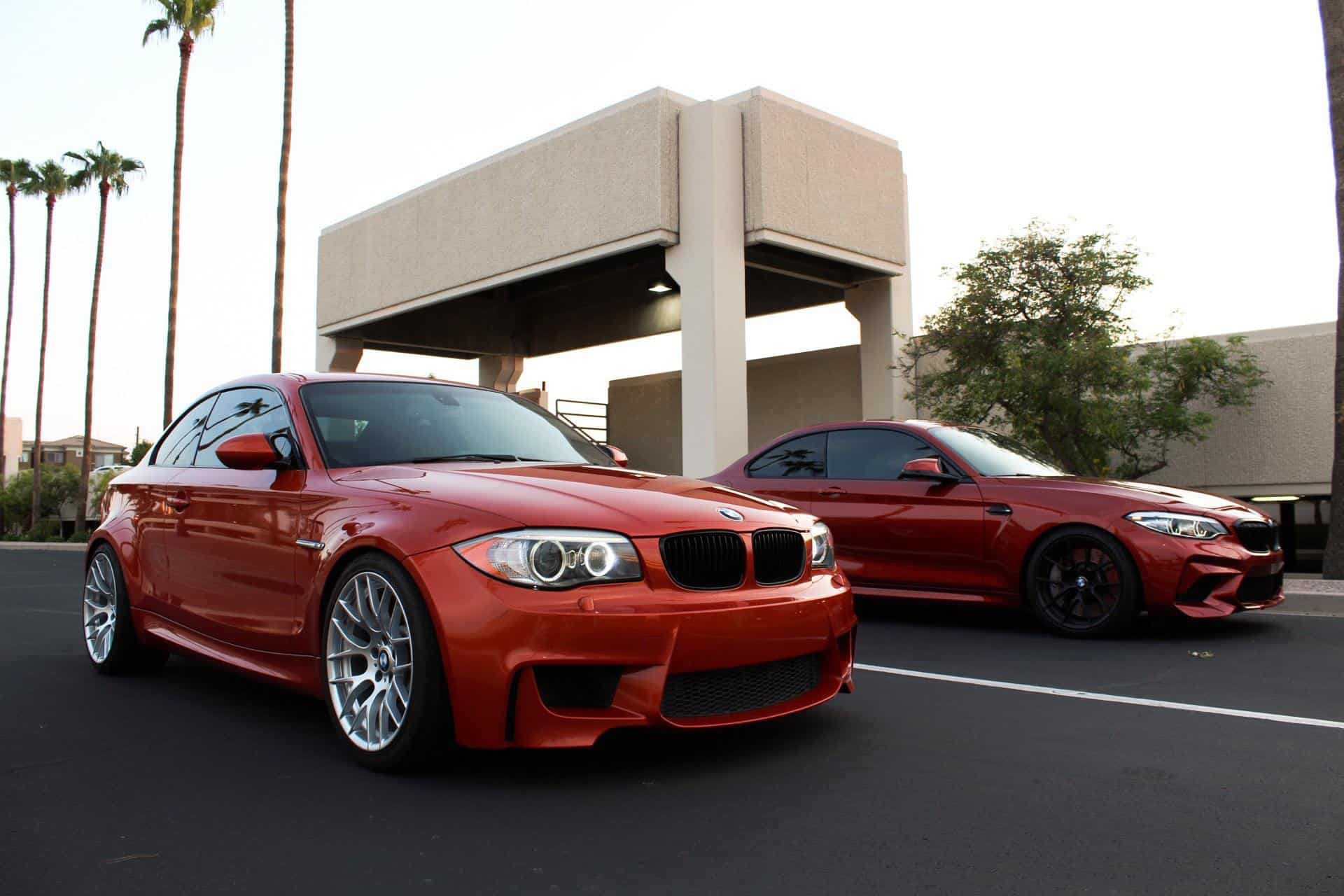
Perhaps the most remarkable aspect of the 1M is its legacy. How its reputation has evolved. Initially seen as a niche experiment, it has since become one of the most sought-after modern BMWs. Limited production — roughly 1,000 units for North America, 6,331 worldwide — has only amplified its desirability. Today, it’s widely regarded as a spiritual successor to the original BMW E30 M3. Compact, playful, and deeply connected to the driver. The car’s values reflect that well; the 1M is one of the only BMWs you could have bought new, driven regularly, and sold for more than you paid for it. Good ones driven sparingly regularly toe the six-figure mark, but even driver-quality cars regularly trade for well over their original $46,000 MSRP.
In many ways, the 1M also previewed the future. Ironic, given its overwhelming emphasis on an analog driving experience. Its turbocharged formula laid the groundwork for what would become standard across BMW’s M lineup. And its ethos — small, aggressive, and focused — lives on most clearly in the BMW M2, which effectively replaced it years later.
Fifteen years on, the BMW 1M stands as a reminder that the best cars aren’t always the most advanced or the most refined. They’re the ones built with a clear, uncompromising vision. The 1 Series M Coupe made an indelible impression the moment in launched. But it’s also a benchmark that lingers to this day. It joins the ranks of legendary M cars before it and since — cars like the M Coupe and M5 CS — that reconfigure expectations and captivate enthusiasts.