Article Summary
- Shell Recharge is live in the My BMW and MINI apps across Canada, consolidating FLO, ChargePoint, Circuit électrique, BC Hydro, and Tesla Superchargers under a single account and payment method.
- CCS-port BMW and MINI owners need the Lectron Vortex Plus NACS adapter to access Superchargers; 2026 models like the iX3 and i3 come with NACS built in.
- Supercharger compatibility rolls out via Remote Software Upgrade for most current BMW BEVs — the original i3 (I01) and MINI Cooper SE (F56) are the only exceptions.
Canadian BMW and MINI EV drivers just got access to one of the most useful charging upgrades the brand has announced in years — and it doesn’t require switching apps, carrying extra cards, or hunting for a compatible plug. BMW Group Canada has rolled out two changes at once: Shell Recharge is now built into the My BMW and MINI apps, and Tesla Supercharger access is available starting today via that same integration.
One app, most of Canada’s charging networks
Shell Recharge gives customers access to FLO, ChargePoint, Circuit électrique, BC Hydro, EV Connect Canada, and Shell Recharge’s own stations. Now, Tesla Superchargers are also accessible under a single account with a single payment method.
The app handles the full session workflow — finding a station, starting and stopping a charge, and payment — all logged in the app’s Charge History. The eRoute trip planner recommends compatible stops along a route and can push the full itinerary, including charging stops, directly to the vehicle navigation. Shell Recharge integration in Canada went live in March 2026; Supercharger access is available from today.
Tesla Supercharger access: what you need to know

How you get to a Supercharger depends on your car. BMW models launching in 2026 — including the upcoming iX3 and i3 — come factory-equipped with a built-in NACS port, so they plug straight in, no adapter needed.
Owners of existing BMW and MINI models with CCS ports need the Lectron Vortex Plus NACS-to-CCS DC adapter. This is the only approved adapter for this purpose. Once you register it in the app (Charging > Adapters > Add Adapter > “NACS (DC)”), compatible Supercharger locations appear in search results and routing. The adapter is available through Lectron and is also listed in the My BMW and MINI apps; warranty is handled by Lectron, not BMW.

The app shows which stations are compatible with your setup, whether an adapter is required, and where Magic Dock Superchargers — Tesla’s hardware with a built-in CCS connector — are available, so you’re not showing up somewhere unprepared. Superchargers typically deliver 250–325 kW DC fast charging, though actual speeds depend on the station and what the vehicle can accept. BMW’s onboard systems manage the charge rate automatically based on battery temperature and state of charge. Pricing, including any site-specific fees, goes through Shell Recharge and shows up in Charge History.
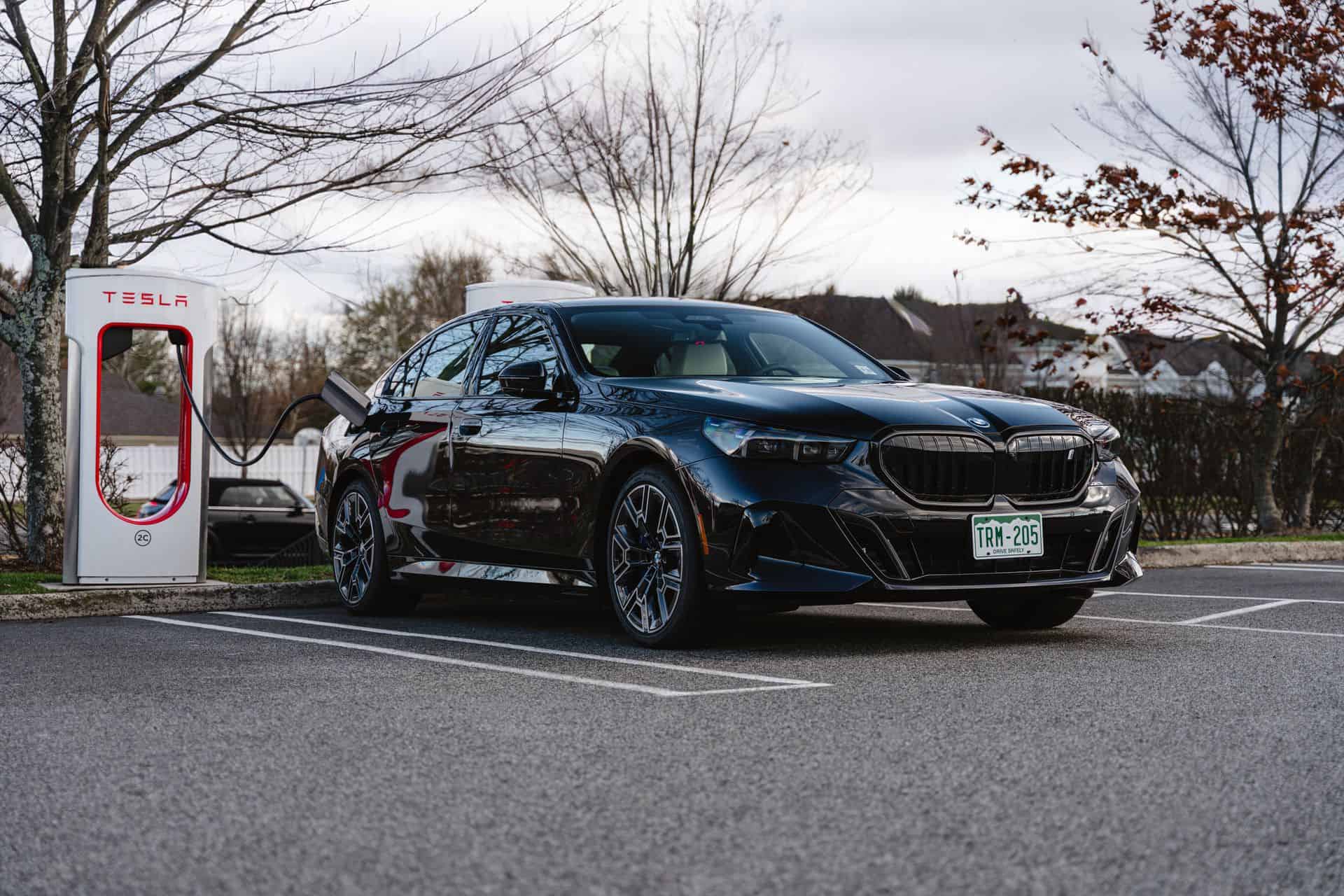
We already tested this firsthand with the BMW i4 at a Tesla Supercharger — watch how it works:
Software updates, not a dealer visit
For current BMW and MINI battery-electric vehicle owners, NACS compatibility arrives as a Remote Software Upgrade. The rollout is model by model — the My BMW app and in-vehicle notifications will tell you when your specific car is ready. Two models are excluded: the original BMW i3 (I01) and the MINI Cooper SE (F56) won’t receive Supercharger compatibility. Every other BEV in the current lineup will, once the software prerequisites are met.
Plug & Charge is also supported at compatible stations. After enrolling in Shell Recharge and toggling Plug & Charge on in iDrive (Apps > Charging > Plug & Charge), the vehicle receives a contract within 24 hours. After that, supported stations start a session automatically when you plug in — no tapping required.
Why this matters for day-to-day charging
A fragmented charging landscape has been one of the most consistent complaints from EV owners who don’t drive a Tesla. Signing up for separate accounts with FLO, ChargePoint, and others — each with its own card and app — has been the reality for most BMW EV owners in Canada. Pulling those networks under a single Shell Recharge account, and adding Supercharger access on top of it, is a genuine fix for a problem that’s been around since the first BMW EVs landed here.
Whether the execution holds up will depend on software rollouts and how reliably station compatibility data stays current in the app. Those are fair questions. But from today, a Canadian BMW EV owner has access to one of the largest combined public charging footprints in the country through a single account — that’s a meaningfully different situation than it was last week.