Article Summary
- BMW’s legendary 507 Roadster debuted in 1956 at the urging of American importer Max Hoffman, who promised it would compete with the Mercedes-Benz 300SL — but production costs nearly doubled the target price and almost pushed BMW into bankruptcy.
- Just 254 examples were ever built, each with a hand-formed aluminum body and a 3.2-liter V8 producing around 150 hp — including one famously owned and repainted red by Elvis Presley during his military posting in Germany.
- From a money-losing rarity, the 507 has become one of BMW’s most valuable automobiles, with exceptional examples now fetching over $2 million at auction and its design DNA still visible in every BMW sports car built since.
There are cars that age gracefully, and then there are cars that simply refuse to age at all. The BMW 507 Roadster belongs to the rarest category of all: those that look, even today, as though they were designed tomorrow. As 2026 marks the 70th anniversary of the 507’s birth, it is worth pausing — really pausing — to understand what this car was, what it cost the company that built it, and why, seven decades later, it still makes the jaw drop and the pulse quicken in equal measure.
A Desperate Gamble on American Dreams

The story of the 507 begins not in Munich, but in New York City, in the offices of Max Hoffman — the legendary Austrian-born importer who had an unusual sense for what American buyers wanted from European automobiles. It was Hoffman who pushed Porsche to build the Speedster. It was Hoffman who convinced Mercedes to bring the 300SL to the United States. And it was Hoffman who, sometime around 1954, walked into BMW’s boardroom with a proposition that was equal parts vision and audacity.
BMW in the mid-1950s was in a precarious place. The company had rebuilt itself from the rubble of postwar Germany, but its model range was awkwardly split between the ultra-luxurious and painfully expensive 501/502 sedans and the tiny, impossibly cute Isetta microcar. There was nothing in between — and certainly nothing that could compete with the Mercedes-Benz 300SL, the car that was dazzling wealthy Americans and dominating the cultural conversation around European performance.
Hoffman’s pitch was elegant in its simplicity: build a lightweight, open-top sports car powered by BMW’s new aluminum V8 engine. Price it at around $5,000. Sell it to Americans. He personally committed to purchasing 1,000 units.
BMW said yes. And in doing so, it set in motion one of the most beautiful — and ultimately most financially ruinous — chapters in automotive history.
The Man Who Drew an Icon
To design the new car, BMW turned to Albrecht Goertz — a German-born, American-trained industrial designer who had studied under the great Raymond Loewy. Goertz was not a career automotive designer by training, which may well be exactly why his solution was so fresh, so unencumbered by convention.
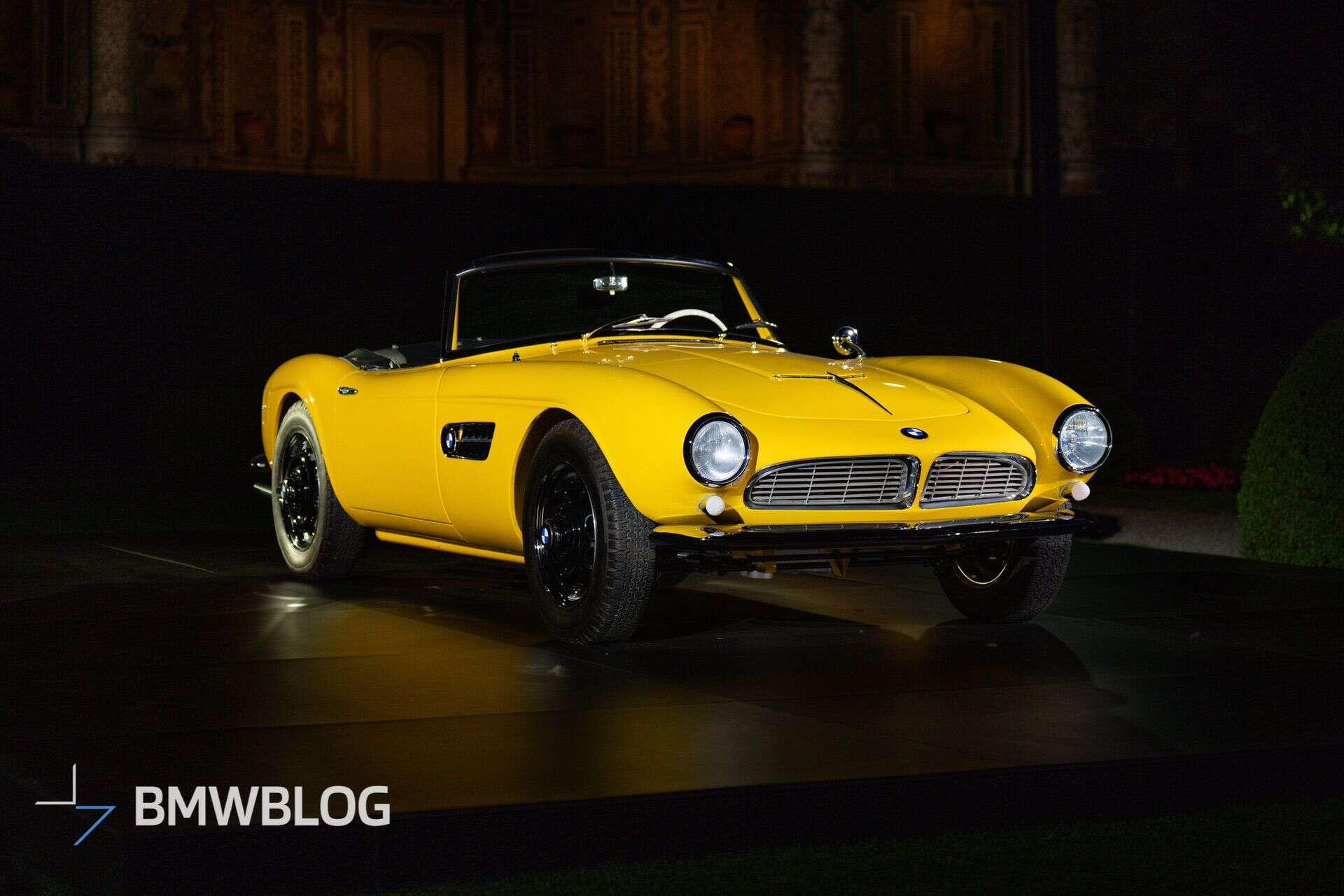
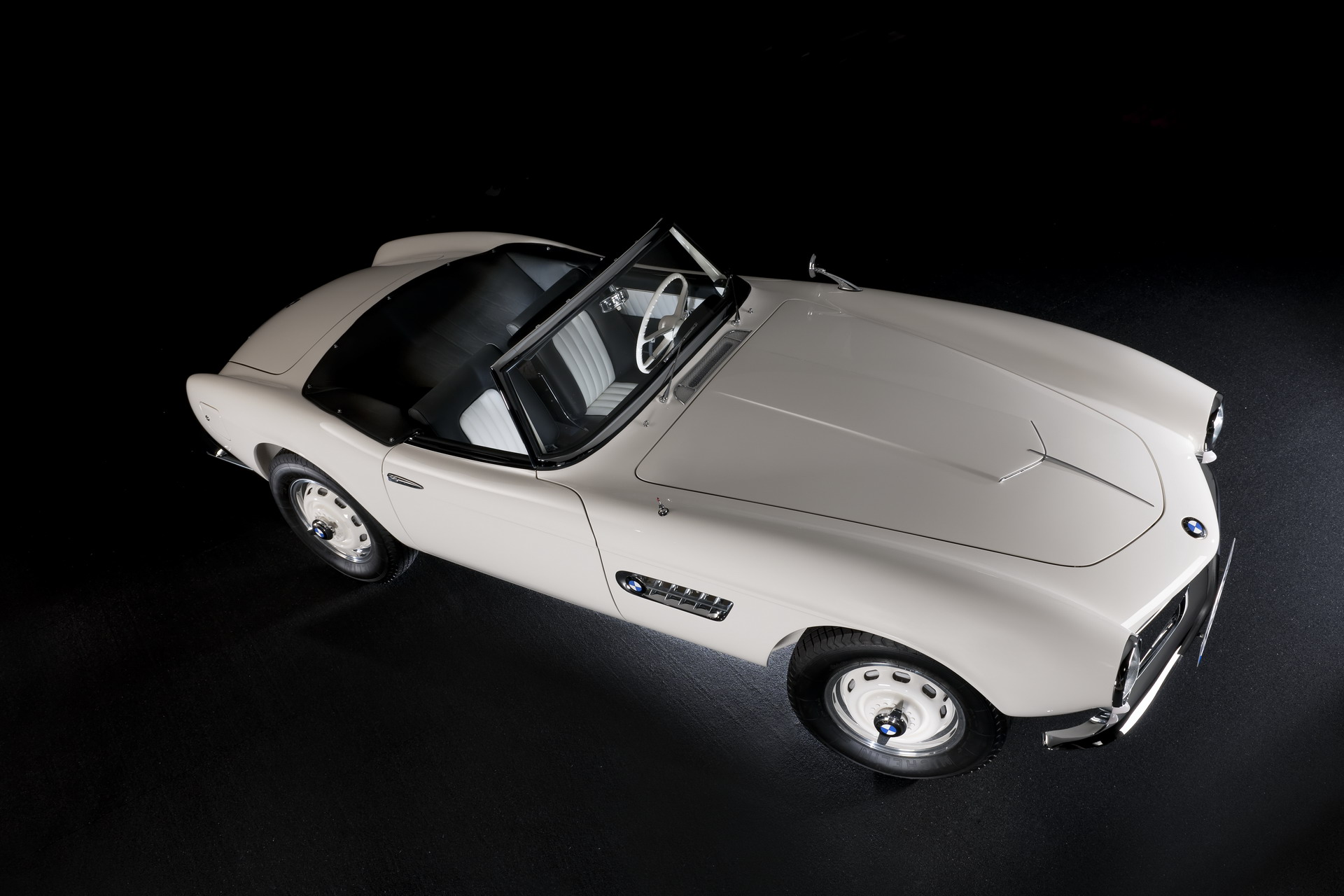
Working with pencil and paper and a deep instinct for proportion, Goertz penned a body of breathtaking restraint. Where the 300SL was dramatic and gull-winged and theatrical, the 507 was serene. It was a study in long, low horizontals — a hood that stretched forward with quiet authority, a windscreen that curved gently back, flanks that swept in a single, unbroken arc from front wheel arch to tail. The kidney grille — BMW’s signature — was present but integrated so organically into the nose that it seemed to have grown there naturally rather than been grafted on.
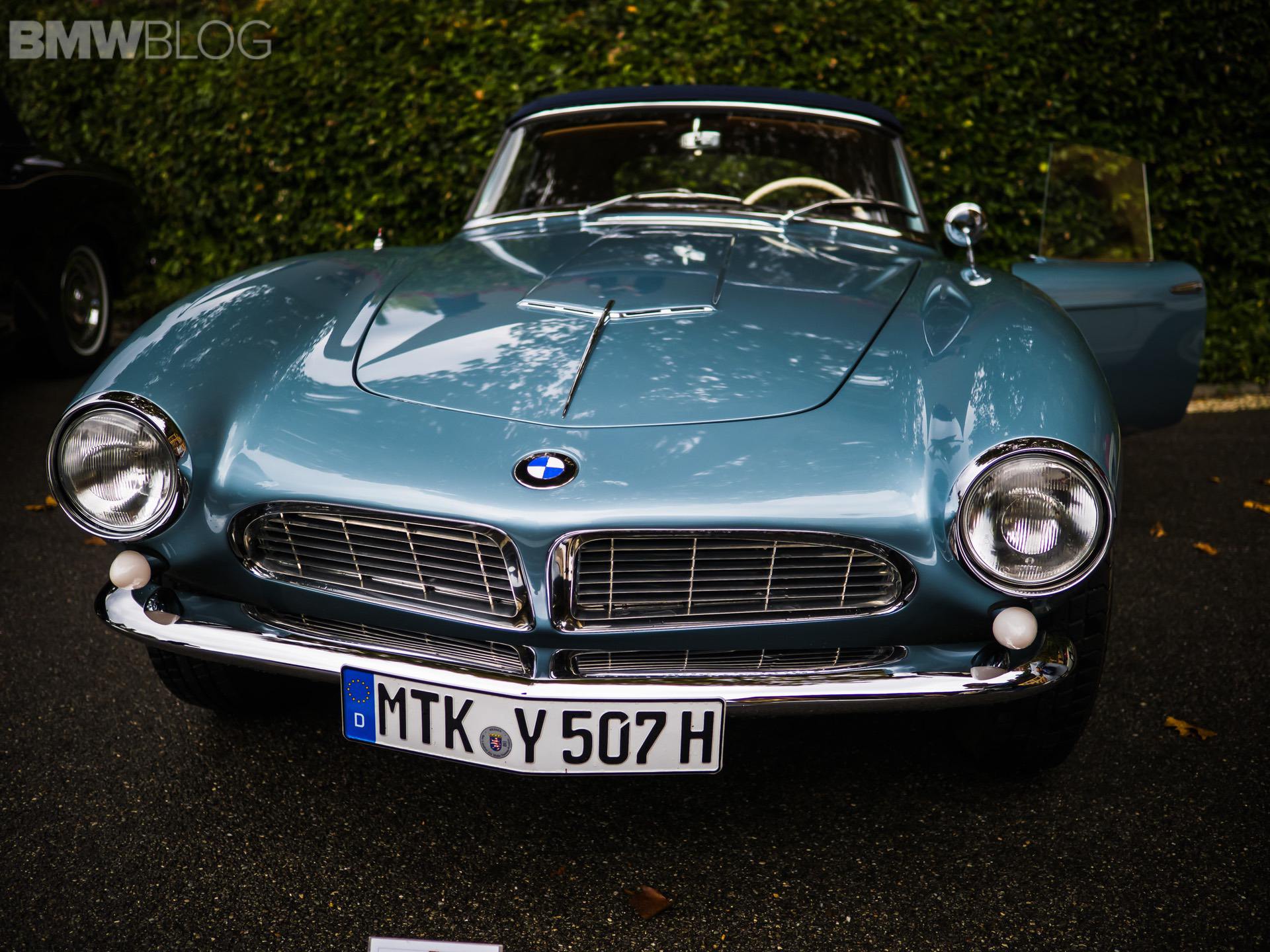
The body was hand-formed in aluminum, giving the car a lightness both literal and visual. In photographs, the 507 almost seems to hover. In the metal, it glows.
Goertz completed the design with remarkable speed. BMW showed the car at the 1955 New York Motor Show, and the response was everything Hoffman had promised. The press was rapturous. Orders poured in. The 507 was, without question, the most talked-about new car in the world.
The Engine That Roared

Beneath that sinuous aluminum skin beat a heart worthy of the body that surrounded it. The 507’s engine was BMW’s all-aluminum 3.2-liter V8 — a unit that had debuted in the 502 sedan but was here tuned and breathed-on to produce somewhere in the region of 150 horsepower in standard form, with some examples pushing considerably higher in more aggressive specification.
In 1956, 150 horsepower in a car weighing around 1,330 kilograms was genuinely serious performance. The 507 could reach 0-100 km/h in roughly 11 seconds — quick for the era, but the headline figure was always the top speed, which BMW claimed at over 220 km/h (around 137 mph). Whether every example genuinely reached that number is a matter of spirited debate among historians, but the point was made: this was a real sports car, not a boulevard cruiser wearing sports car clothes.
The soundtrack was part of the experience. The V8 had a low, cultured burble at idle that opened up into something altogether more urgent under hard acceleration. A four-speed manual gearbox sent power to the rear wheels.
The Car That Nearly Sank BMW

Here is where the story turns, because the 507’s beauty contained within it the seeds of near-catastrophe.
The problem was cost. BMW had assumed the 507 could be manufactured at a price that would allow it to retail at Hoffman’s target of $5,000. That assumption turned out to be spectacularly, almost fatally wrong.
The hand-crafted aluminum bodywork, built by the coachbuilding firm Baur in Stuttgart, was extraordinarily labor-intensive. Every panel was shaped by craftsmen working with hammers and wheeling machines and decades of accumulated skill. There was no way to automate this process, no way to industrialize what was essentially a bespoke, artisanal operation.
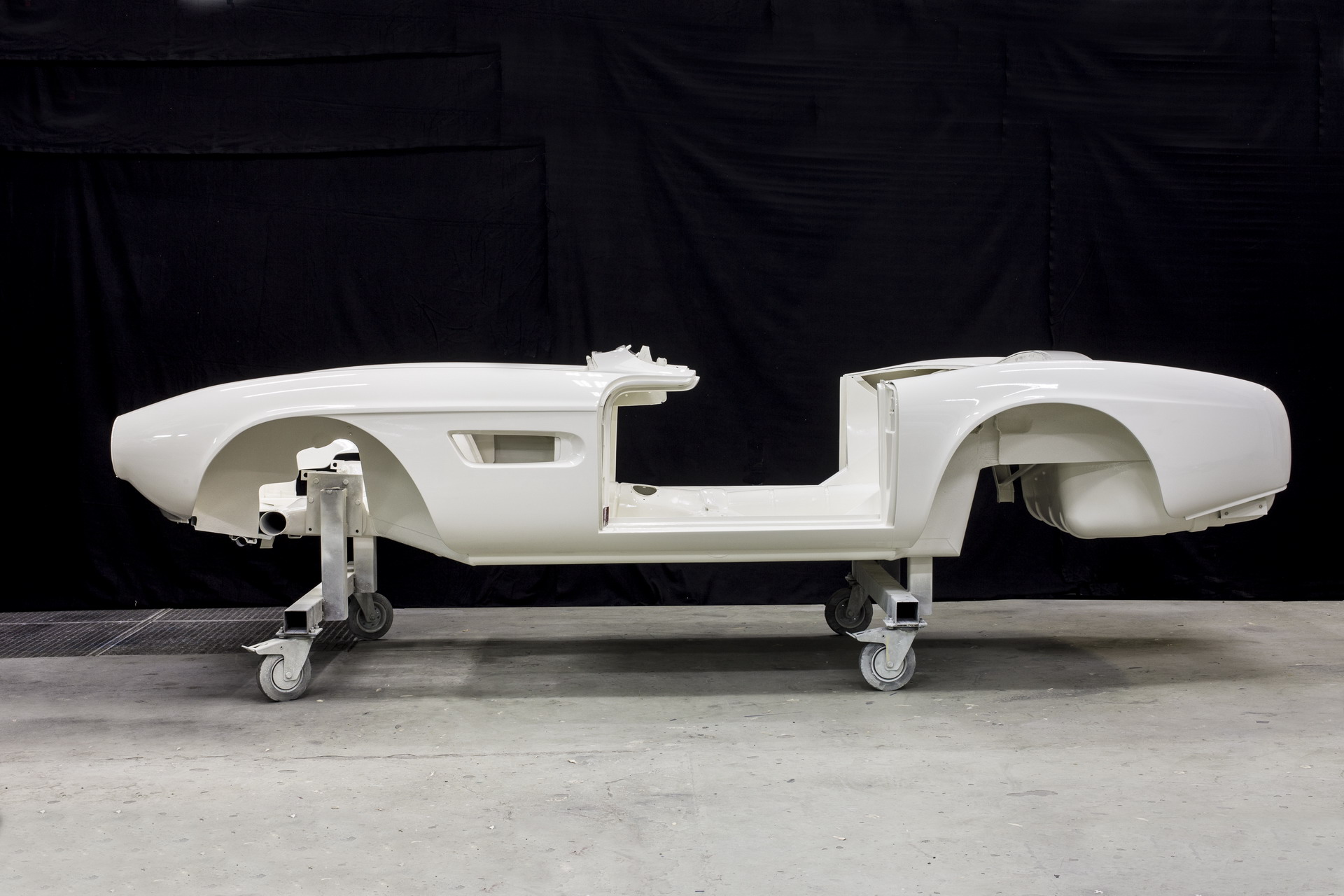
The true cost of manufacturing each 507 was far beyond what BMW had planned. Rather than retailing at $5,000, the car was priced in the United States at around $9,000 to $10,000 — roughly double the original target, and dangerously close to the territory of the Mercedes 300SL it was meant to undercut. Sales suffered accordingly. Hoffman, faced with a car that cost twice what he had imagined, never came close to fulfilling his commitment of 1,000 units.
In total, between 1956 and 1959, BMW built just 254 examples of the 507. On each one, BMW is believed to have lost money. The car that was supposed to save BMW’s premium credibility in America very nearly put the company out of business entirely.
It was the small, humble Isetta — the microcar that seemed the 507’s comic opposite — that actually kept the lights on in Munich during those difficult years.
Elvis, Rock and Roll, and a Repainted BMW

Among those 254 lucky owners, one stands above all others in the mythology of the 507: Elvis Presley.
When the King arrived in West Germany in 1958 to serve his military posting with the US Army, he was already the most famous human being on the planet. He purchased a white BMW 507 — serial number 70079 — and it became, for the duration of his posting, his constant companion and his greatest civilian extravagance.
There is a lesser-known postscript to Elvis’s 507, one that speaks to the particular kind of fame that comes with being Elvis Aaron Presley. Female fans, apparently undeterred by the concept of private property, would routinely lipstick-kiss the white paint, leaving the car perpetually decorated in the traces of adoration. Elvis, in a decision that was either pragmatic or philosophical depending on your interpretation, eventually had the car repainted red.
His 507 was rediscovered decades later, restored to white, and returned to something approaching its original glory. It was displayed publicly to considerable fanfare — a piece of cultural history that transcended automotive collecting and touched something deeper in the popular imagination.
Resurrection and Recognition

For much of the postwar period, the 507 existed in a curious limbo. Collectors and historians knew it was significant, knew it was beautiful, knew it was rare. But it hadn’t yet achieved the stratospheric values — and the corresponding stratospheric profile — that would come later.
That changed in earnest as the classic car market matured through the 1980s and 1990s and the 507 began appearing at the great international auctions. The numbers were revelatory. By the time the market peaked in the mid-2010s, exceptional examples of the 507 were fetching north of $2 million at auction — with the very finest cars, those with documented histories and original matching-numbers drivetrains, reaching considerably higher.
Today, a well-presented 507 is comfortably a multi-million-dollar automobile. The car that lost BMW money on every build has become one of the most valuable production cars the company ever made.
What 70 Years Teaches Us

It is tempting, at moments like this, to lapse into uncritical reverence. The 507 was a commercial failure. It nearly destroyed the company that built it. By any rational business metric, it was a disaster. And yet.
And yet it gave BMW something that cannot be manufactured or engineered or budgeted: a soul. The 507 established, once and for all, that BMW was not merely a maker of competent, reliable motorcars. It was a company capable of genuine beauty — of work that transcended function and entered the realm of art.
Every BMW sports car that followed — the 3.0 CSL, the M1, the Z8, the i8 — carries some DNA from the 507. Every time a BMW designer reaches for that particular balance of restraint and drama, of aggression and elegance, they are reaching back, consciously or not, to what Albrecht Goertz drew on those first sketching pads seven decades ago.
The 507 was a commercial catastrophe. It was also one of the greatest things BMW ever did. Here’s to the next seventy.