Key Legal Insights from Foley’s Automotive Team
- President Trump suggested that existing nation-specific trade deals that were supported by the now-invalidated IEEPA tariffs would continue to be honored. While it remains unclear how the terms of individual trade deals will be reimposed, the Trump administration plans to conclude a number of trade investigations within five months that would allow tariffs to be imposed under Section 232 of the Trade Expansion Act of 1962, or Section 301 of the Trade Act of 1974.
- According to a PwC analysis quoted this month by Kelley Blue Book, the auto industry paid roughly $8.6 billion in the now-invalidated IEEPA-based tariffs through October 2025.
- U.S. imports not subject to the temporary Section 122 tariffs include “USMCA compliant goods of Canada and Mexico,” as well as “all articles and parts of articles that currently are or later become subject to section 232 actions.”
- Under Section 232 tariffs, U.S. Customs and Border Protection has collected over $24 billion on automobile imports and more than $10 billion on auto parts since the levies were implemented in Spring 2025.The Trump administration has imposed Section 232 duties on goods that include – but are not limited to – certain auto parts, automobiles, steel, aluminum, copper, trucks and buses, and truck parts.
- U.S. new light-vehicle sales in February reached a SAAR of 15.8 million units, representing a drop of 1.4% year-over-year and the second consecutive month of declines, according to analysis from the National Automobile Dealers Association (NADA).
- The NADA stated that while the U.S.-Israel conflict with Iran is “unlikely to have significant impacts on the auto industry in the short term,” a prolonged conflict “could result in higher energy prices, which can lead to increased prices for production inputs and potential supply disruptions.”
- Certain European automakers expressed concern the Iran conflict may increase risk in areas that include higher shipping costs and delivery delays.
- Analysis by Bernstein indicates Toyota, Hyundai, and Chinese automakers are expected to have a higher potential impact from a prolonged Iran conflict, due to the risk of disrupted shipments and rising oil prices.
- Over 3,000 ships, representing 4% of global ship tonnage, are estimated to be idle in Persian Gulf ports amid an 80% reduction in traffic at the Strait of Hormuz. In addition, Houthi rebels could resume missile and drone strikes on vessels in the Red Sea in response to the U.S.–Israeli military action against Iran. Due to suspended operations and rerouting, certain container shipping lines are introducing emergency surcharges, and air freight is also susceptible to increased rates.
- The Wall Street Journal reports shipping disruptions in the Strait of Hormuz and strikes on critical infrastructure may constrain global supplies of aluminum.
OEMs/SUPPLIERS
- Certain auto suppliers are diversifying into other industries to seek more profitable revenue streams amid ongoing auto industry volatility.
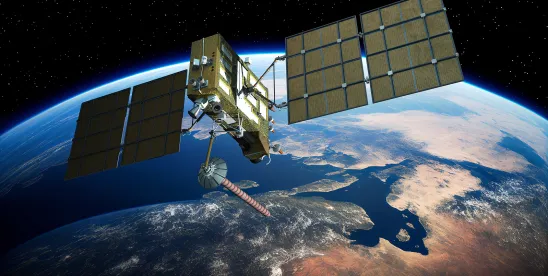
- HARMAN will collaborate with Viasat to deploy in-vehicle satellite voice-calling capabilities.
- Toyota raised its price to acquire supplier Toyota Industries, in a revised offer that won approval from an activist investor and values the supplier at $40 billion.
- Key risks to the Detroit Three automakers resulting from a prolonged conflict in Iran include the impact of higher oil prices on operational costs and U.S. consumers’ intent to purchase new vehicles. The Detroit Three brands collectively comprised approximately 5% of the 3.4 million unit market in the entire Middle East Region in 2025.
- According to a study of advertised new-vehicle prices in the U.S. from the third quarter of 2025 until early February 2026, vehicles produced in Canada, Germany, and Japan increased “at a meaningfully steeper rate” compared to vehicles produced in the U.S. Since October 2025, vehicles produced in Canada rose by an average of almost $4,000, vehicles assembled in Japan increased by nearly $3,300, vehicles from Germany were up by over $2,800, and those from Mexico were up by over $1,500.
- A number of automakers have significantly raised new-vehicle “destination charges” to help mitigate the impact of tariffs, according to a report in The Wall Street Journal.
- The CEOs of nine major global automakers have been replaced in a one-year period.
- Automotive News provided an update regarding the dispute in Dutch court pertaining to control of Chinese-owned Netherlands-based semiconductor manufacturer Nexperia.
- A report in Bloomberg compared humanoid robots under development by Tesla and Hyundai.
- BMW launched its first humanoid robot pilot project at its plant in Leipzig, Germany.
- Analysis from Edmunds indicated 29% of new-vehicle buyers with trade-ins in Q4 2025 had negative equity, representing the highest share since Q1 2021. The average amount owed on underwater trade-ins reached $7,214 in Q4 2025, representing the highest level Edmunds has ever recorded.
Autonomous Technologies and Vehicle Software
- Bosch will collaborate with Chinese battery-electric vehicle manufacturer Nio to develop technologies for software-defined vehicles (SDVs) such as battery management systems, drive-by-wire chassis systems, and sensing modules.
- Ford is recalling over 4 million pickup trucks, SUVs, and vans between model years 2021 and 2026 due to a software error that may cause trailer brake and lighting system failures.
- U.K. self-driving technology provider Wayve raised $1.2 billion in a series D investment round, reaching an estimated valuation of $8.6 billion.
- Swedish self-driving truck company Einride secured roughly $113 million in capital via a private investment in public equity (PIPE) financing round ahead of its planned $1.8 billion merger with a special-purpose acquisition company.
HYBRID AND Electric Vehicles
- Hyundai and Kia plan to postpone or cancel a number of EV models.
- Tesla, Ford and Volvo held the top three spots in an annual study that assesses automakers’ EV supply chains for environmental sustainability and responsible sourcing.
- Lucid Motors announced a target to produce between 25,000 and 27,000 vehicles this year, including the ramp-up of the all-electric Gravity crossover. The EV maker sold 18,000 vehicles in 2025.
- The European Commission announced the Industrial Accelerator Act (IAA) to establish low-carbon and ‘Made in EU’ requirements for public procurement of, or subsidies for, strategic sectors that include EVs. This proposal is intended to the strengthen industry and create jobs in Europe, and reduce the region’s reliance on China.