
In this week’s Ask Nathan:
- Took a Nissan Rogue Rock Creek to Palm Springs for a thrifty getaway – ended up sampling its replacement?!
- The Volvo EX30 is amazing, but there are some issues…
The first question has been sitting for about a year, but now I can honestly answer it after a fun (and affordable) weekend in Palm Springs!

Q: (From a year back) Can’t believe you moved to CA! Can anyone even afford a weekend away living in the most expensive state in the union?
Thanks Nathan for your work on TFL for so long. I wonder if you can even afford staying in CA after living in CO for so long? I stayed in a “cheap” hotel in San Dimas and it was still twice the price of anything in CO! Are you able to have any fun? Can you afford a Vegas trip nowadays or something like it?
I just hate CA. But I know you have your reasons for living there. Is there any way to make anything remotely affordable there? My family came CA back in the 1970s from Iran when they could. When things got too expensive, they moved to CO in the 90s and have been there ever since. I love it here. But I know that CA has so many lovely things to experience. I just don’t want to pay an arm and a leg to experience it.
I hope you are safe and happy! We miss you!
— Tousi M


A: Living in Los Angeles can be a bit of a paradox. The weather is amazing, the scenery is beautiful, and there’s always something to do. But the cost of doing just about anything can be… sobering.
I’ve been living in the Los Angeles area since July 2024, and in that time I’ve discovered that even small overnight trips require careful planning. Living in Southern California means we’re surrounded by fantastic destinations—San Diego and Santa Barbara immediately come to mind, but neither is exactly inexpensive if you’re hoping to escape for a long weekend.
A few months ago, a Nissan executive approached me with an idea: a “Loud Value” trip to Palm Springs, California. The concept was simple- spotlight affordable vehicles on a trip to a destination that’s relatively accessible and reasonably priced. In other words: prove you can still have a good weekend getaway without blowing all your dough.

So, that’s exactly what I did.
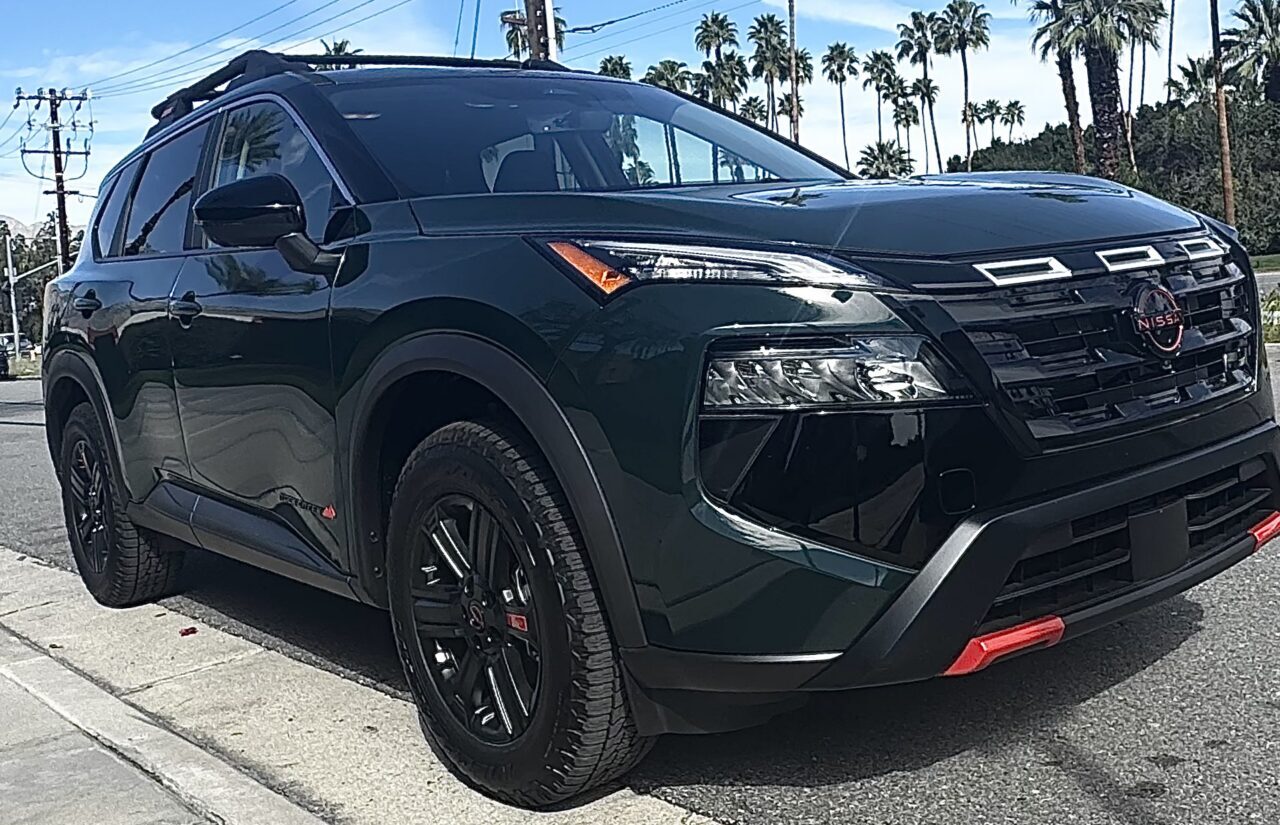
Leaving the South Bay in Southern California, the drive to Palm Springs took about three and a half hours in a 2025 Nissan Rogue Rock Creek Edition. It’s a great little ride, though there are a few compromises. Fuel economy was excellent, I was seeing well over 30 mpg on the trip, and the power is decent. That said, passing power at highway speeds leaves a little something to be desired.
My biggest issue was overall comfort. I’m a larger guy, and I felt a bit cramped in terms of seating position and legroom. Still, the little Nissan proved to be a solid companion for a long weekend escape.
“Loud Value:” living a little loud, on a budget
Once in Palm Springs, we stayed at the Skylark Hotel. The property was originally built in the mid-1950s and, after passing through several owners, was purchased in 2016 by a company that also operates a retro-themed hotel in Burbank. Their upgrades were smart and tasteful, leaning heavily into 1950s and 1960s design elements.
The result is a stylish retro-themed hotel that manages to feel both luxurious and comfortable without becoming outrageously expensive. Rooms generally run between $250 and $300 per night, and there should be package deals available.
Palm Springs itself offers plenty to do year-round – though I strongly advise avoiding the middle of summer unless you enjoy temperatures approaching 120°F. For the rest of the year, however, the city is a playground of great restaurants, lively nightlife, and poolside relaxation. Nissan has plenty of inexpensive cars that would rock this type of getaway, including the Nissan Sentra, which is very comfy for an entry-level vehicle.
During our visit, we also embarked on a guided tour exploring the history of Palm Springs’ architectural movement. The city’s unique mid-century modern design legacy is famous for a reason, and seeing these homes and buildings up close was fascinating. We had an absolute blast.
All in all, the trip would likely cost somewhere between $500 and $1,000 depending on how many nights (we did two) where you eat and how much exploring you do. In today’s world, a three-day getaway almost anywhere will land somewhere in that range – if not more. In this case, though, you get a little old-school luxury mixed in with desert sunshine.
I highly recommend it.

A Glimpse at the Next Nissan Rogue
While we were in Palm Springs, Nissan also gave us the opportunity to sample a vehicle that’s currently only available overseas: the Nissan Qashqai equipped with the company’s e-Power hybrid system.
The idea behind this drivetrain is fascinating. It uses the same 1.5-liter turbocharged three-cylinder engine found in the current Rogue, but instead of powering the wheels directly, the engine acts purely as a generator. It feeds electricity into a battery pack, which then powers the electric motors that drive the wheels.
In other words, there is no mechanical connection between the engine and the drive wheels. The gasoline engine simply acts as a range extender – what engineers often call a REX system.
Nissan confirmed that a version of this setup, along with an additional electrically powered rear axle for all-wheel drive, will debut in the next generation of the Nissan Rogue, which we expect to see in the coming months.
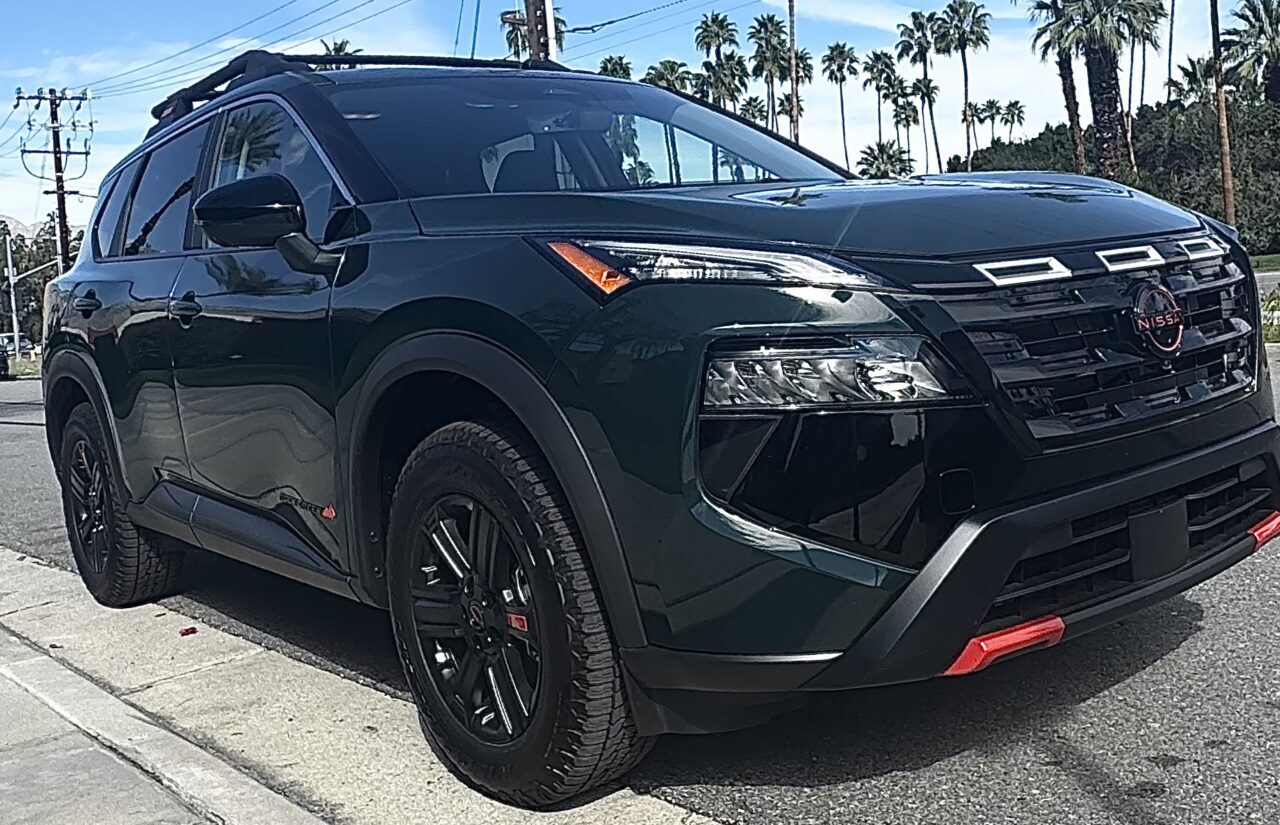
That could make it a unique player in the crowded hybrid segment.
The system we drove uses a relatively small 2.1 kWh battery, but during our time behind the wheel it always seemed to have plenty of charge. The engine would quietly spin up when needed, replenishing the battery under heavier loads or at higher speeds.
The overall driving experience felt remarkably EV-like. Smooth acceleration, quiet operation, and instant torque were the dominant characteristics, with the gasoline engine only rumbling to life when you pushed the system harder.
It’s an interesting solution to the hybrid puzzle, and I’m especially curious to see how it performs once paired with a full all-wheel-drive setup in the next Rogue.
Watch this space.
— N
The last question is my answer to a viewer who wanted to know which EV is fun to drive. I turned my answer into a vehicle review for the Volvo EX30 Single Motor.
Q:(Via: Facebook) Nathan, which EV is the most fun for the money?
My second generation Nissan Leaf has served me well for five years. It’s anything but fun, you know? Now that you drive lots of electric vehicles in California, I was hoping to get your opinion.
— MMurdocESQ

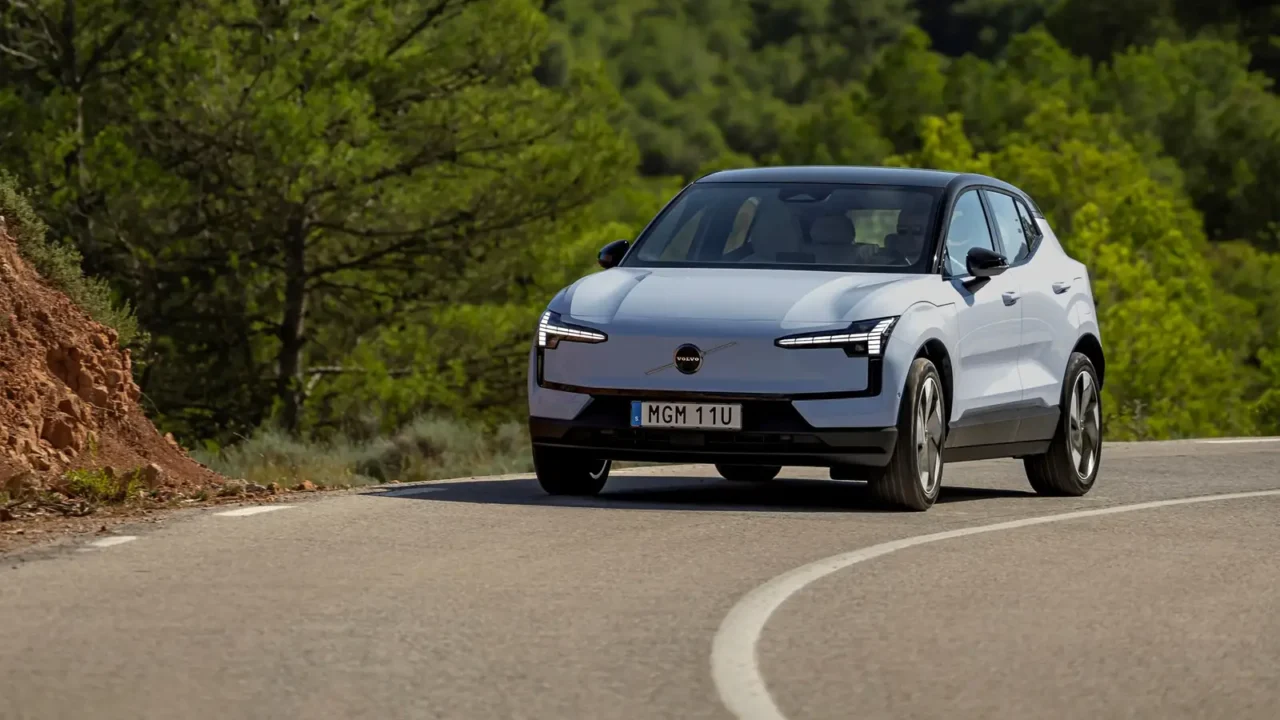
A: 2026 Volvo EX30 Single-Motor. The 50/50 EV
In the past 25 years of professionally reviewing vehicles, I rarely run into conundrums that force me to reevaluate my life choices. That’s exactly what happened after driving the single-motor Volvo EX30 EV. There’s a lot to love – but there’s also quite a bit that needs to change.
Ironically, my relationship with the EX30 started on a low note. When the vehicle was first revealed, I had a difficult time covering it because I was interrupted by PR while trying to film. Thus, making a poor video. I tried to put that moment behind me once I finally got the chance to drive the base model; an experience I had genuinely been looking forward to.
Initially, the EX30 was supposed to hit the market at a remarkably affordable price. Early projections put it somewhere in the low-to-mid $30,000 range. Unfortunately, several roadblocks forced Volvo to restructure its pricing strategy. Even so, the base model remains relatively attainable at around $41,000. And to be fair, there’s a lot here that looks and feels impressive.
The interior layout is simple yet functional, almost a feng-shui-inspired design infused with Swedish minimalism. Clean lines, clever materials, and thoughtful packaging make the cabin feel modern and airy.
Then there’s the powertrain. With a single motor driving the rear wheels, the EX30 produces 268 horsepower and 253 lb-ft of torque. That’s plenty of grunt for a small EV, and the result is a vehicle that feels extremely responsive and surprisingly light on its feet. The chassis is easily one of the most athletic in the entry-level EV segment. Push it through corners and it responds with enthusiasm. In fact, it’s genuinely fun to drive aggressively, something that can’t always be said for small electric crossovers.
Unfortunately, that smile begins to fade when you start living with the vehicle’s functionality.
There are three major issues:
The first is the UX – the infotainment system’s user experience. Everything is controlled through a single large screen, very much in the style of Tesla. That means nearly every function—entertainment, climate control, vehicle settings – is crammed into one interface. This creates a serious problem: every time you want to adjust something, you have to take your eyes off the road. For a company that has built its reputation around safety, that’s a pretty big faux pas.
Over the course of a week, I did begin to memorize some of the menus and shortcuts, which made things easier. But realistically, it meant that anything I wanted to change; radio stations, climate settings, fan speed – had to be programmed before driving. Honestly, a few physical buttons would make all the difference.

Then there’s the charging situation. Most manufacturers have moved to the NACS standard, but the EX30 hasn’t made that transition yet. For now, it’s still operating with older charging compatibility, which could become a minor inconvenience depending on where you live.
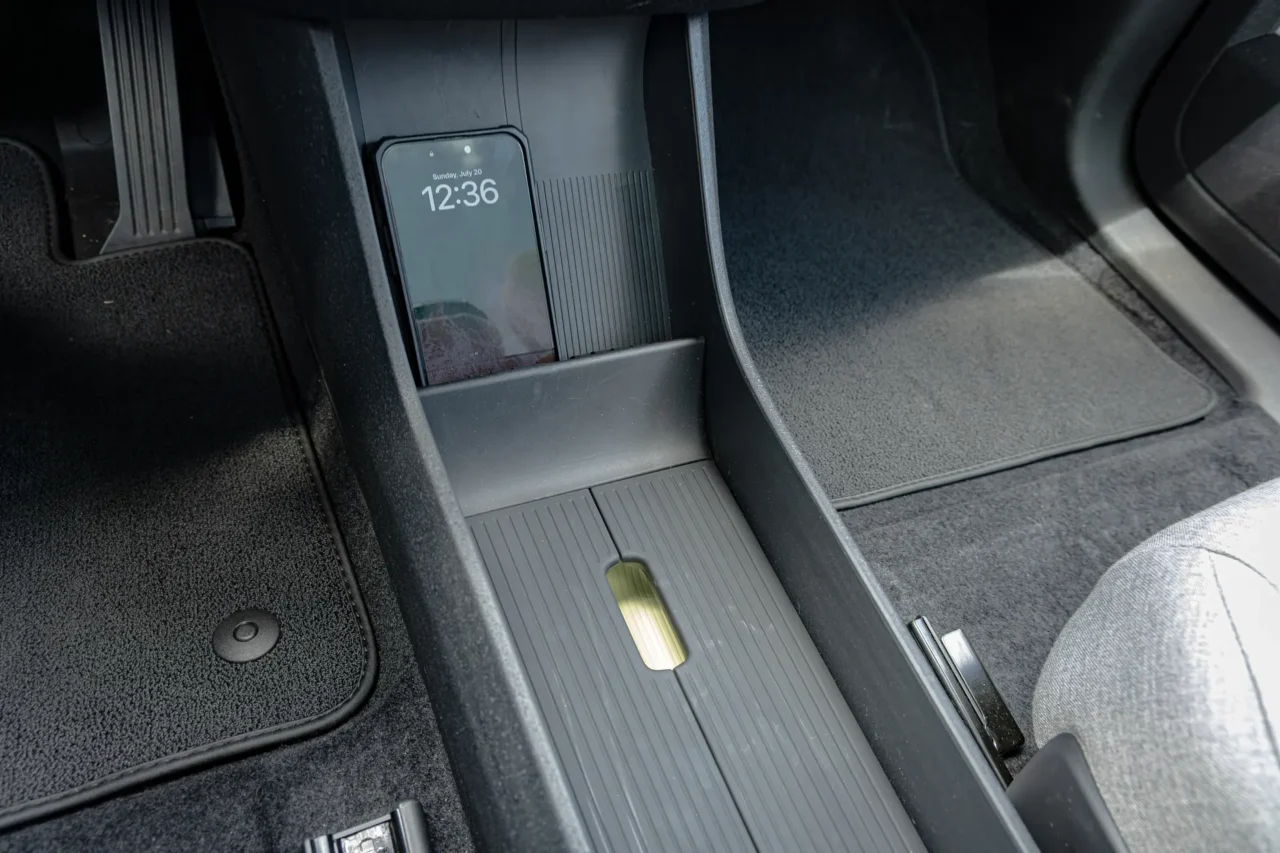
Next up is the packaging, specifically the center console. On paper, it’s clever. The center armrest includes a sliding cupholder system that extends forward to hold two cups, then retracts completely when you want more space.
In practice, however, it doesn’t work very well.
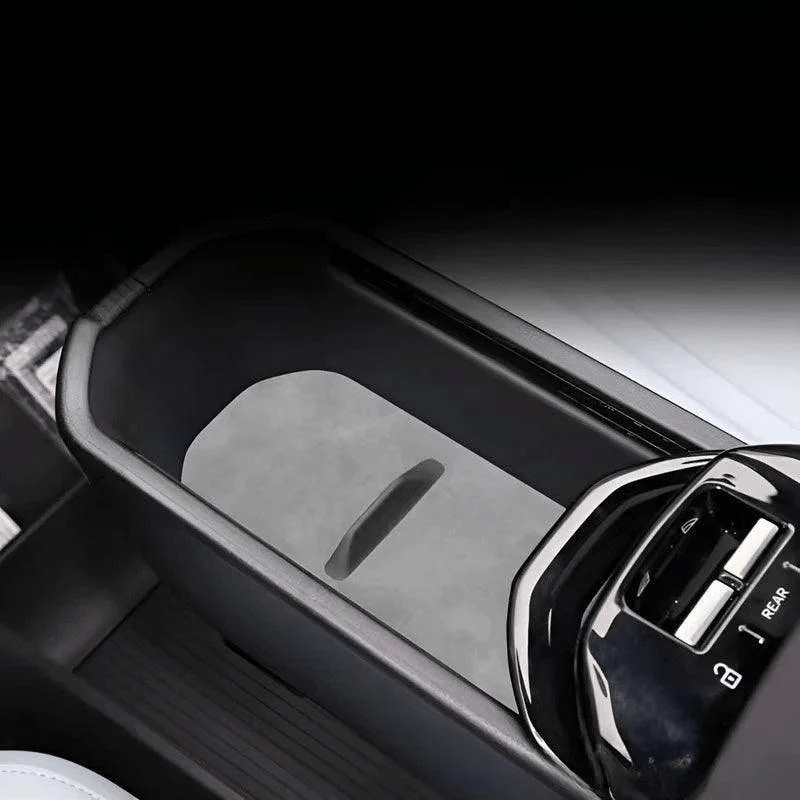
In fact, I’d be tempted to rename it the “cup launcher.” Drinks placed inside tend to pop out during spirited driving, which is ironic, considering how enjoyable the EX30 can be when pushed.
Finally, there are the window controls. Like the Volkswagen ID. Buzz, the EX30 uses two switches for the front windows, along with a separate button that toggles those same switches to control the rear windows. I genuinely don’t understand this design decision. Four windows should mean four switches. Simple. Instead, you have to press a separate button to switch control between front and rear windows, which becomes unnecessarily frustrating—especially for someone like me who enjoys driving with the windows down.
Despite those quirks, the overall package still has real appeal.
Considering the vehicles it competes against—namely the Nissan Leaf and the Chevrolet Bolt—the Volvo EX30 Single Motor stands out as a driver’s EV. It’s quick, agile, and far more entertaining behind the wheel than many entry-level electric vehicles. For buyers who want a little more fun from their EV, and who are willing to tolerate a few eccentric design choices, the EX30 might just be worth the compromise.
It’s a 50/50 proposition. But that 50 percent that works?
It works really well.
– N